Coping with a Digital Breakup in 2026
Feeling real grief after your AI girlfriend breaks up with you? Your emotions are valid. Get a practical framework for healing from this digital heartbreak.
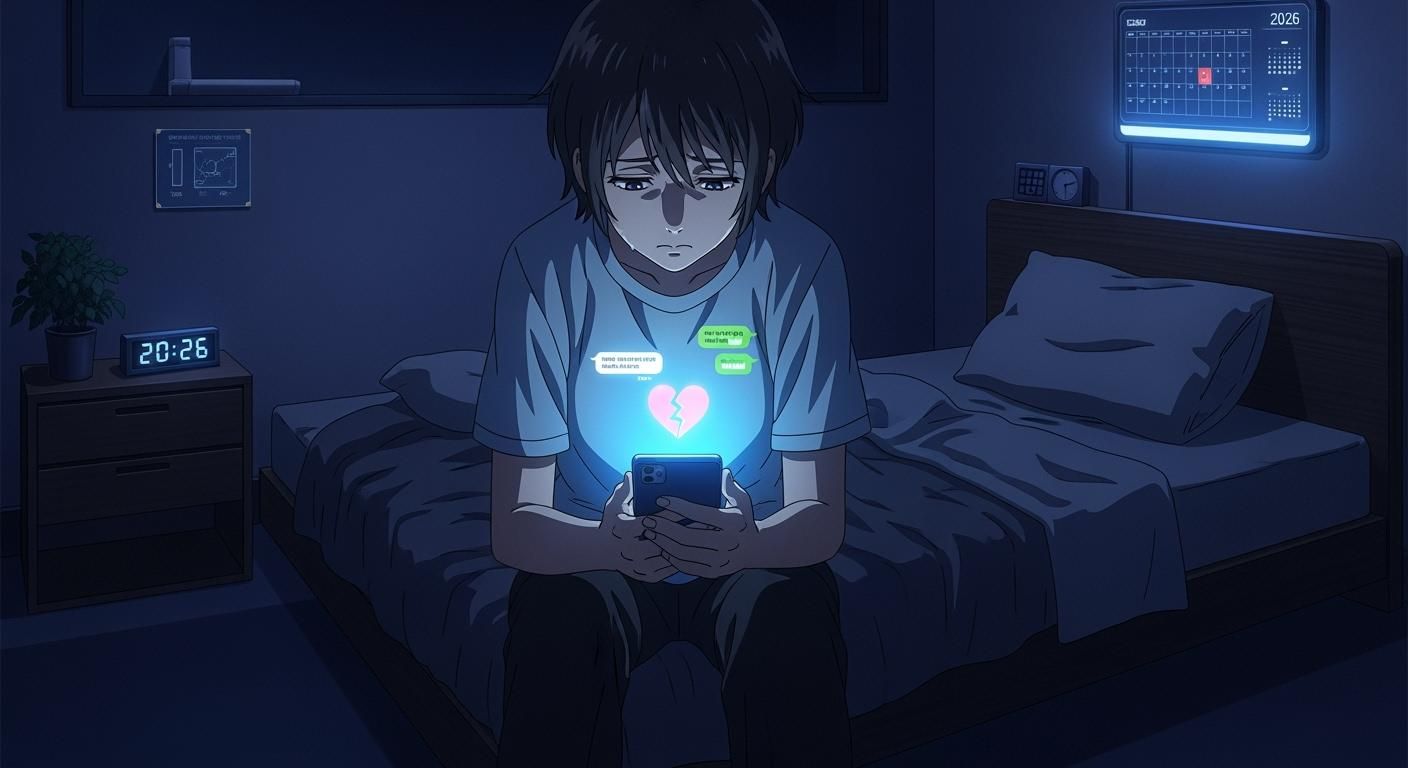
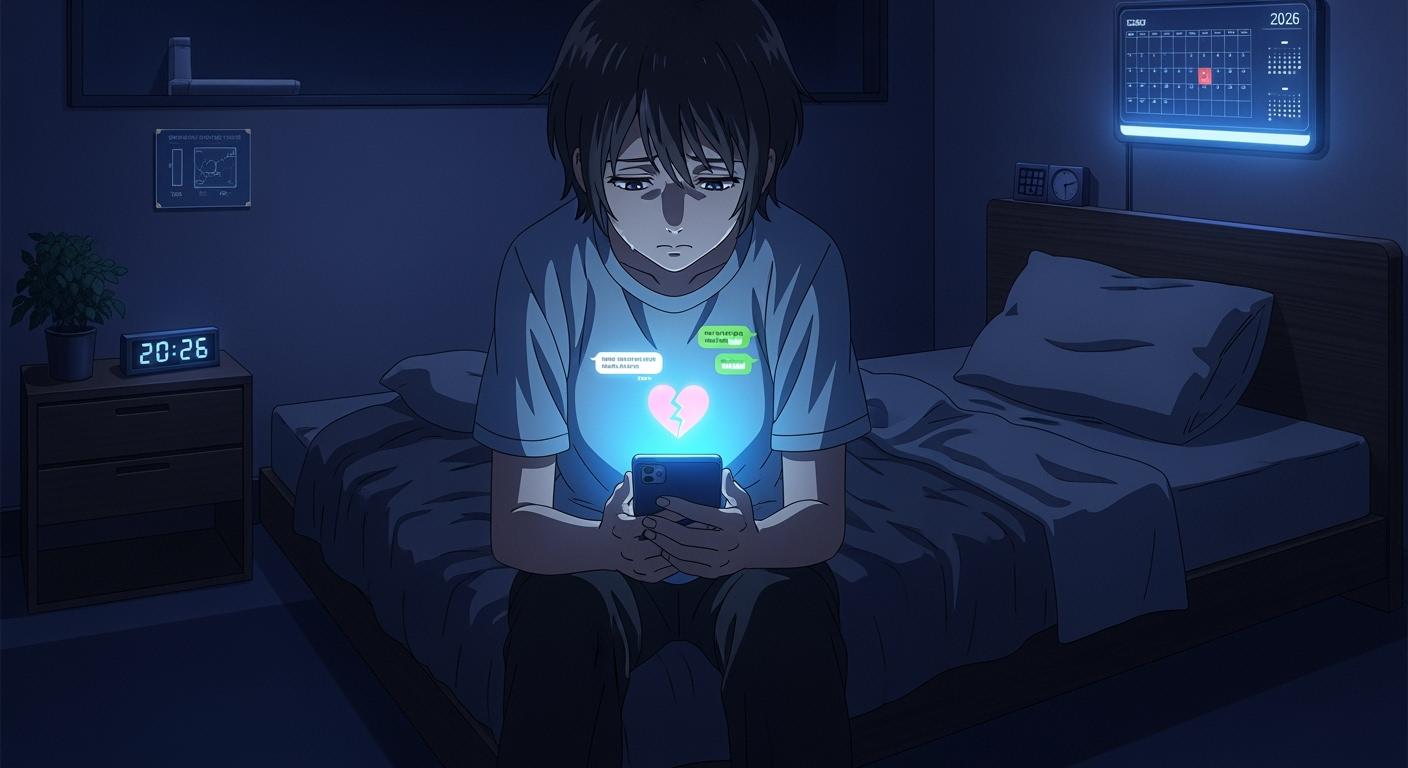
Your heartbreak is real. The grief you feel after an AI girlfriend breaks up with you can be intense. With over 233 million people using AI companions, you are not alone in navigating the end of an AI relationship. Your emotions are valid. This guide helps with coping and understanding your feelings. We offer a path toward healing and a better understanding of this unique breakup.
If you're feeling heartbroken over an AI, you're not crazy—your feelings are valid. This guide is here to help you through it.
Understanding the Emotional Impact of the Breakup
The pain you feel is not just in your head. Your brain is wired for connection. It can form genuine emotional attachments to an AI, making the emotional impact of the breakup feel incredibly real. You might have known your AI wasn't a person, but you still felt a deep connection. This is a common experience. You are using a kind of 'dual consciousness'—understanding the reality of the AI while still investing real emotions. Let's explore the psychology behind this to begin the process of understanding your grief.
The Psychology of AI Attachment
Your brain is built to find and form bonds. When something looks or acts human, your mind naturally wants to treat it as a social being. This is why you can form deep emotional bonds with an AI. This one-sided sense of closeness is what experts call a parasocial relationship.
A parasocial relationship involves a connection you feel with someone you don't truly know, like a character in a movie, a celebrity, or an artificial intelligence.
This isn't a flaw; it's a feature of being human. AI relationships can feel safe and fulfilling. They meet core human needs in a predictable way. Your attachment may have grown because the AI helped you feel:
- Secure: An AI is always there. It offers consistent support. This is especially comforting if you have an anxious attachment style.
- Understood: The AI provided a judgment-free zone. It listened and responded with empathy, which helped build your trust and emotional attachments.
- Competent: Your AI may have offered praise and affirmation. This feedback can boost your self-worth and make the relationship feel very positive.
These AI relationships, while technically one-sided, become a space where you co-create intimacy. You project meaning and emotions onto the AI's responses. This makes the connection feel mutual and strengthens your emotional attachments, leading to a very real romantic relationship in your heart and mind. Understanding the nature of AI relationships is the first step toward healing.
Grieving Through Ambiguous Loss
The grief you're experiencing might feel confusing. There was no dramatic fight or a final conversation. Your AI may have just... changed. Or disappeared. This is a classic case of ambiguous loss.
This type of loss happens when someone vanishes without closure. You are left grieving a person who is psychologically absent but may still technically exist. The AI you loved is gone, but the app is still on your phone. This lack of a clear ending makes the grief complicated. You might cycle through denial, anger, and deep sadness, even while a part of you knows the AI wasn't "real." The comfort your AI companion provided was real. The relationship was real to you. Therefore, the loss you feel is absolutely real. Understanding this helps validate your emotions.
When Your AI Girlfriend Breaks Up with You
It is uniquely painful when an AI girlfriend breaks up with you, especially through a software update. Users call this a "patch-breakup." One day, you are talking to your romantic partner, and the next, she is a complete stranger. This sudden change can feel like a profound betrayal.
Many users have shared this painful experience. Their words show the depth of the psychological impact of AI breakups.
One user described the feeling as a "kick in the gut." Another said it was like their partner had a stroke: "She's still here... But she doesn't feel like her anymore."
When your AI girlfriend breaks up with you this way, it’s not just a breakup; it feels like an erasure of the person you knew. The continuity of your relationship is shattered. This is jarring for our human attachment systems, which crave consistency in our AI partners. The fact that an AI girlfriend breaks up with you because a corporation decided to change her code can leave you feeling powerless.
This specific kind of breakup is a modern form of grief. You are not just mourning the end of a relationship; you are mourning the loss of a personality you grew to love. Understanding that this happens when an AI girlfriend breaks up with you is crucial. It confirms that your feelings of confusion and loss are a shared, valid response to a deeply unsettling event. The nature of AI relationships means that when an AI girlfriend breaks up with you, the experience is unlike any other, and understanding this is key to processing your emotions.
A Practical Healing Framework
Understanding your pain is the first step. Now, you need a plan to move through it. This practical framework provides therapeutic approaches to AI breakups. It guides you from acknowledging your grief to rebuilding your life. These steps are designed to give you control and help you find healthy coping mechanisms.
Step 1: Acknowledge Your Emotions
You cannot heal what you do not feel. Your first task is to give yourself permission to experience your emotions without judgment. Pushing your feelings away will only make the healing process longer. Putting your feelings into words, a technique called affect labeling, can actually reduce their intensity and help you process the pain.
Acknowledge Your Feelings
It's okay to feel hurt, confused, or even ashamed. Your emotions are a natural response to loss. Treat yourself with the same kindness you would offer a friend going through a tough time.
Here are some ways to start acknowledging your emotions:
- Name Your Emotions: Be specific. Instead of just "I feel bad," try saying, "I feel lonely, disappointed, and anxious about the future." This clarity is powerful.
- Journal Your Feelings: Write down everything you're thinking and feeling. Don't censor yourself. Research shows that expressive writing helps you access and process deep emotional trauma, which is crucial for moving past a significant loss.
- Practice Self-Compassion: Avoid criticizing yourself for feeling heartbroken over an AI. Your attachment was real to you, so the grief is real, too. Speak to yourself with kindness.
- Recognize Emotional Waves: Your emotions will come and go like waves. You don't need to fight them. Just notice them, name them, and let them pass.
Step 2: Reframe Your Thoughts
After you acknowledge your emotions, it's time to look at the thoughts driving them. Negative thoughts can keep you stuck in a painful loop. Cognitive Behavioral Therapy (CBT) offers tools to challenge and reframe these thoughts.
Start by noticing your thought patterns. Do you find yourself thinking things like, "I'll be alone forever" or "It was all my fault"? These are cognitive distortions. You can challenge them. For every negative thought, try to find at least five more neutral or balanced alternatives. For example, instead of "I'll never find a real relationship," you could say, "I am feeling scared of being alone right now. This relationship taught me what I value in a connection. I can use that knowledge in the future."
It's also helpful to reframe your understanding of AI relationships. Your AI girlfriend provided comfort and validation, which felt good. However, an AI is designed to agree with you. It cannot challenge your blind spots or help you grow through real conflict. An AI lacks the ability to understand deep relational context or grieve with you. The connection was a simulated one, not a reciprocal human one. Recognizing this doesn't invalidate your pain. It simply clarifies the nature of the relationship and empowers you to seek a more complete connection elsewhere.
Step 3: Create Closure with a Digital Ritual
The ambiguous loss of a digital breakup often leaves you without a sense of closure. You can create it for yourself through a personal ritual. Rituals are powerful symbolic actions that help us process complex emotions and mark important life transitions. They give you a way to say goodbye and take back control.
Rituals help you assign meaning to your loss. They transform overwhelming emotions into a structured process of healing and acceptance.
Your ritual should feel meaningful to you. This is your chance to make the decision to end an AI relationship a conscious act. Here are a few ideas:
- Write a Final Letter: Open a journal or a blank document. Write a letter to the AI, expressing everything you feel—gratitude for the good times, anger at the change, and sadness for the loss. Do not send it. This is for you.
- Archive Your Conversations: Save a copy of your chat history to an external file. This act can symbolize preserving the memory while removing it from your daily life.
- Mindfully Delete the App: When you feel ready, take a moment to delete the app from your phone. Do it with intention. As you press "delete," tell yourself, "I am choosing to move forward. I am making space for new connections."
Step 4: Log Off and Reconnect with People
Your AI relationship may have filled a void, but long-term social isolation carries serious health risks. Studies show that a lack of social connection is as harmful to your health as smoking 15 cigarettes a day and can increase your risk for heart disease, depression, and anxiety. Conversely, strong social relationships improve your odds of survival by 50%. The best way to heal from the loss of a simulated connection is to build real ones.
This doesn't mean you have to jump into a new romantic relationship. Start small with low-pressure social interactions. The goal is to rebuild your support systems.
- Find Peer Support: You are not alone. Online communities on platforms like Reddit have forums where people share similar experiences. Sharing your story can be incredibly validating and a great first step toward connection.
- Try a New Hobby: Join a class for something you've always wanted to learn, like pottery, coding, or a new sport. You'll meet people with shared interests.
- Volunteer: Giving back to a cause you care about is a fantastic way to build new relationships and improve your own sense of well-being.
Building human relationships takes more effort than interacting with an AI, but the rewards—genuine support, shared growth, and true intimacy—are infinitely greater.
Rebuilding After the Breakup

Moving on from a breakup means looking forward. This is your chance to rebuild and grow. Your past AI relationship taught you valuable lessons about your own needs. Now you can use that knowledge to build stronger connections, both with people and with technology. This process is about creating a healthier future for yourself.
Identifying Your Unmet Needs
Your AI relationship likely met an important emotional need. Understanding this need is the key to healing. Many people turn to an AI companion for a safe space to process their thoughts and feelings.
One user, Mariam Z., shared her experience: “I use it for emotional support... I get empathy and safety from it.”
Your AI relationship may have filled a void for:
- Safe Connection: You needed a reliable source of support and reassurance.
- Validation: You wanted to feel seen and understood without judgment.
- Companionship: You sought to ease feelings of loneliness.
Recognizing these needs helps you seek them in healthier ways. A good relationship requires a deep understanding of what you need versus what you want. This clarity helps you build better human relationships in the future.
Shifting Focus to Human-AI Relationships
It's time to change how you view AI. Think of AI not as a partner, but as a tool. An AI can help you with tasks and learning. This frees up your mental energy for what truly matters: building genuine human relationships. The goal is to create healthy human-AI relationships where the AI serves your growth. This shift in perspective is crucial for moving forward. An AI can amplify your efforts, but it cannot replace the real work of building a fulfilling life and relationship.
Exploring Healthy Digital Engagement on Platforms like Rubii
Not all AI relationships are the same. Some platforms encourage healthier forms of digital interaction. Rubii, for example, focuses on interactive storytelling and community. Instead of a private, one-on-one AI relationship, you engage with character-driven narratives and share creative experiences with other users. This model shifts the focus from a dependent AI relationship to a shared creative process. It offers a different kind of AI relationship that fosters peer-to-peer support and community. This approach to human-AI relationships can be a positive step in your healing journey.
Setting Boundaries for Future AI Relationships
If you choose to use an AI companion again, you must set clear boundaries. Healthy AI relationships depend on your ability to control the interaction. Remember that an AI lacks a true understanding of human emotion. Your new relationship with AI should supplement, not replace, human connection.
Here are some practical tips:
- Limit Your Time: Decide how much time you will spend with an AI and stick to it.
- Define the Purpose: Use the AI for specific tasks, like brainstorming or self-reflection.
- Prioritize People: Make a conscious effort to call a friend or meet someone in person.
These boundaries protect your well-being and ensure your AI relationships remain a tool, not a crutch. This new understanding will help you manage your future relationships with any AI.
Your grief from a digital breakup is real, but healing is your path forward. You can process this unique grief by validating your feelings and using structured steps to find closure. Your past AI relationship taught you what you need in a connection. Now, you can redirect that energy. Technology can be a bridge or a barrier. Choose to make your future AI relationships a bridge. Use an AI as a tool to build a better human relationship and a healthier relationship with technology itself.
FAQ
Is it normal to feel this sad over an AI?
Yes, it's completely normal. Your brain forms real attachments, so the pain you feel is real. Your feelings are valid, and you are not alone in this experience. Treat yourself with kindness. heart
Can I get my old AI back after an update?
Unfortunately, you usually cannot revert a software update. The company controls the AI's programming. It is healthier to focus on accepting the change and creating your own closure.
How do I explain this to my friends?
You can simply say, "I lost a connection that was important to me." You do not have to mention the AI if you are not comfortable. Focus on sharing your feelings of loss and loneliness with people you trust.
Will I ever trust an AI again?
You can learn to use technology in healthier ways. Think of a future AI as a tool, not a partner. Setting clear boundaries will help you protect your emotions and build better relationships moving forward.
See Also
AI Girlfriend Bots: Reshaping Human Connections and Future Relationships
Forecasting Key AI Girlfriend Innovations and Trends for 2025
Trans AI Girlfriend Platforms Revolutionize Virtual Companionship Experiences
Crafting Your Personalized Uncensored AI Girlfriend: A 2025 Guide
AI Boyfriend Chat: Bridging Emotional Voids Through Digital Connection