A Guide to Navigating AI-Generated Celebrity Content Risks
Understand the risks of AI-generated celebrity content, including swift ai porn, and explore legal, ethical, and technical solutions to protect privacy and trust.
AI-generated content is reshaping how you consume media, especially when it involves celebrities. This technology creates realistic images, videos, or audio clips that mimic real individuals, often without their consent. The rapid increase in such content brings serious risks. For example:
- AI-based financial fraud surged by 700% in 2023, with losses projected to reach $40 billion by 2027.
- By early 2023, many fact-checked misinformation claims involved AI-generated images.
- AI-driven intimate media accounted for 96% of synthetic videos online in 2019, harming millions of victims.
These examples highlight how swiftly AI-generated content, including swift ai porn, can spread misinformation or violate privacy. Addressing these risks requires you to focus on legal safeguards, ethical practices, and advanced detection tools.
Understanding AI-Generated Celebrity Content
Definition and Examples
AI-generated content refers to media created by artificial intelligence. This includes images, videos, and audio that mimic real people, often with stunning accuracy. For example, AI can generate a video of a celebrity speaking words they never said or create a photo of them in a fictional setting. These creations often look so real that they can easily fool viewers. You might have seen AI-generated images of celebrities in unusual outfits or performing impossible stunts circulating online. These examples highlight how AI can blur the line between reality and fiction.
Applications in Media and Entertainment
AI-generated content has found a home in media and entertainment. Filmmakers use AI to recreate deceased actors or de-age performers for specific roles. Music producers employ AI to mimic celebrity voices, creating new songs that sound like they were sung by famous artists. Social media platforms also thrive on AI-generated celebrity content. You may notice AI-generated videos or images going viral, sparking conversations and debates. These applications show how AI is reshaping the entertainment industry, offering new possibilities for creativity and storytelling.
Why It’s Popular
AI-generated content has gained immense popularity due to its ability to captivate audiences. On platforms like Facebook, AI-generated images often receive millions of views and interactions. For instance, a single post featuring AI-generated visuals garnered 40 million views and 1.9 million reactions. Posts showcasing AI-generated images of celebrities, kitchens, or children frequently achieve over 1 million reactions. This level of engagement demonstrates the public's fascination with AI's creative potential. You might find these creations entertaining, thought-provoking, or even shocking, which explains their widespread appeal.
Legal Risks of AI-Generated Celebrity Content
Intellectual Property and Copyright Issues
AI-generated content often raises significant legal challenges related to intellectual property and copyright protection. When AI creates media that mimics a celebrity's likeness, it can infringe on their rights. For example, the case involving Taylor Swift highlighted the complexities of unauthorized use of a celebrity's image. Even though the content was fictional, its distribution sparked debates about the misuse of public figures' identities. This incident underscores the importance of legal frameworks to address these issues as AI technology evolves.
Copyright laws aim to protect original works, but AI complicates this process. You may wonder who owns the rights to AI-generated content. Is it the creator of the AI, the user, or the AI itself? These questions remain unresolved in many jurisdictions. Without clear guidelines, disputes over ownership and usage rights will likely increase. For instance, if an AI-generated video uses a celebrity's voice or image without permission, it could violate copyright laws and lead to lawsuits.
To navigate these challenges, you should stay informed about copyright protection laws and ensure compliance when using AI-generated content. Legal experts recommend obtaining explicit consent from individuals whose likenesses are used, even in fictional or transformative works.
Privacy Violations and Consent
AI-generated content also poses serious privacy concerns. When AI mimics a celebrity's voice or image without their consent, it can lead to privacy violations. Recent controversies, such as the alleged use of Scarlett Johansson's voice by OpenAI, highlight these risks. Similarly, Taylor Swift's experience with deepfake technology in January demonstrated how AI can exploit a celebrity's identity. These examples show how easily AI can cross ethical and legal boundaries.
The financial impact of privacy violations can be devastating. A Hong Kong finance company lost $25 million due to a deepfake video call. This incident illustrates how AI-generated content can harm not only individuals but also organizations. Governments are beginning to address these issues. Twenty U.S. states have enacted laws targeting deepfakes, focusing on explicit content and election-related misinformation. The EU's AI Act also aims to regulate deepfake technology by requiring clear identification of AI-generated content.
To protect yourself and others, you should advocate for stronger privacy laws and support initiatives that promote transparency in AI-generated content. Always seek consent before using someone's likeness in AI creations, even if the content seems harmless.
Defamation and Reputation Risks
AI-generated content can damage reputations and lead to defamation claims. Misleading or false representations of public figures spread quickly online, causing significant harm. For instance, AI-generated images have shown politicians in compromising or unflattering situations, such as appearing aged or in intimate settings. These depictions can tarnish their public image and lead to legal disputes.
Deepfakes have also been used to impersonate political figures, portraying them making offensive statements. Such content not only misleads the public but also undermines trust in media. The rapid dissemination of these false representations increases the risk of defamation claims. Legal experts emphasize that individuals must prove their persona was used without permission and that this misuse harmed their reputation.
To mitigate these risks, you should verify the authenticity of AI-generated content before sharing it. Promoting media literacy and educating the public about the dangers of deepfakes can also help reduce the spread of harmful content.
Compliance with AI Regulations
Navigating the legal landscape of AI-generated celebrity content requires a clear understanding of regulatory frameworks. These frameworks aim to address the ethical, legal, and societal challenges posed by AI. However, enforcing these regulations remains a complex task due to the rapid evolution of AI technology.
Several recent cases highlight the challenges of enforcing AI regulations. California introduced a law requiring explicit consent for using AI-generated digital replicas of actors. This law ensures that actors and their estates retain control over their digital likeness, even after their death. Such measures address ethical and legal concerns, particularly as deepfakes continue to rise. Unauthorized AI-generated content often leads to misinformation and scams, making compliance with these regulations essential.
The Federal Trade Commission (FTC) has also taken steps to regulate AI use. In a settlement with Rite Aid, the FTC prohibited the company from using AI facial recognition technology for five years. The consent order mandated the deletion of consumer images previously used in the technology. Additionally, Rite Aid must implement a monitoring program to address risks and consumer complaints before using AI in the future. This case underscores the importance of regulatory oversight in preventing misuse and protecting consumer rights.
Despite these efforts, the lack of comprehensive federal laws in the United States creates enforcement challenges. Existing laws are often adapted to AI-related situations, leading to complexities in compliance. For instance, the FTC's focus on AI bias and discrimination reflects the evolving nature of AI regulation. Without clear federal guidelines, businesses and individuals face uncertainty when navigating legal requirements.
To ensure compliance, you should stay informed about current regulations and legal obligations. Understanding copyright laws is crucial, as AI-generated content often involves the use of copyrighted material. Obtaining explicit consent before using a celebrity's likeness can help you avoid legal disputes. Additionally, advocating for stronger regulatory frameworks can promote transparency and accountability in AI use.
By adhering to these principles, you can contribute to a safer and more ethical digital environment. Compliance with AI regulations not only protects individuals but also fosters trust in the technology's potential.
Ethical Challenges in AI-Generated Celebrity Content
Bias in AI Models
AI models often reflect the biases present in the data used to train them. When these biases go unchecked, they can lead to unfair or harmful outcomes. For example, an AI system trained on limited or skewed data might favor certain demographics while misrepresenting others. This issue becomes particularly concerning in the context of ai-generated content involving celebrities. If the AI disproportionately generates content featuring specific groups, it can reinforce stereotypes or marginalize underrepresented communities.
You might notice that some ai-generated content portrays celebrities in ways that align with societal biases. For instance, AI might depict women in stereotypical roles or fail to accurately represent people of diverse ethnic backgrounds. These biases not only perpetuate harmful narratives but also raise ethical considerations about fairness and inclusivity. Addressing this challenge requires developers to use diverse and representative datasets. Regular audits of AI systems can also help identify and mitigate bias, ensuring that the content generated is fair and respectful.
Transparency in AI Content Creation
Transparency plays a crucial role in maintaining trust in ai-generated content. When you encounter content online, you should know whether it was created by a human or an AI system. Without clear labeling, AI creations can deceive audiences, leading to misinformation and ethical dilemmas. For example, if an AI-generated video of a celebrity goes viral without disclosure, viewers might believe it to be authentic, potentially causing confusion or harm.
Regulatory bodies and industry leaders emphasize the importance of transparency. The Federal Trade Commission (FTC) mandates that AI-generated marketing content must be disclosed to prevent consumer deception. Publishers also advocate for labeling AI content to enhance human creativity rather than replace it. Failing to disclose AI involvement can result in copyright disputes, economic disruptions, and a loss of public trust.
| Evidence Type | Description |
|---|---|
| Regulatory Requirement | The FTC mandates disclosure and labeling for AI-generated marketing content to prevent consumer deception. |
| Best Practices | Publishers require AI-generated content to be properly identified and used to enhance rather than replace human input. |
| Risks of Non-Disclosure | Failing to label AI content can lead to deception, copyright issues, bias, misinformation, and economic disruption. |
To promote transparency, you should support initiatives that require clear identification of AI-generated content. Advocating for ethical guidelines and regulatory measures can help ensure that AI is used responsibly. By staying informed and demanding accountability, you can contribute to a more trustworthy digital environment.
Exploitation of Celebrity Likenesses
AI technologies have made it easier than ever to replicate a celebrity's likeness. While this can lead to creative and entertaining content, it also opens the door to exploitation. Unauthorized use of a celebrity's image, voice, or persona can harm their reputation and violate their rights. For instance, Tom Hanks recently criticized a dental plan for using his AI-generated likeness without his consent. Similarly, musicians like Drake and The Weeknd faced challenges when deepfake songs mimicked their voices without permission.
The misuse of generative AI capabilities is widespread. Studies reveal that 9 out of 10 documented cases involve the manipulation of human likeness through impersonation. This tactic often targets celebrities, leveraging their fame to attract attention or profit. Such exploitation raises serious ethical considerations, as it disregards the rights and dignity of individuals.
- 9 out of 10 documented cases involved the misuse of generative AI capabilities.
- The most common tactic was the manipulation of human likeness through impersonation.
To combat this issue, you should advocate for stricter regulations and ethical guidelines. Supporting laws that protect individuals from unauthorized AI-generated content can help prevent exploitation. Additionally, raising awareness about the ethical implications of using AI to replicate celebrity likenesses can encourage more responsible practices.
Impact on Public Trust
AI-generated celebrity content has a profound impact on public trust. As you encounter more AI-generated media, distinguishing between real and fake becomes increasingly difficult. This erosion of trust affects how you perceive information, interact online, and make decisions.
The Growing Concern Over Deepfakes
Deepfakes, a prominent form of AI-generated content, have heightened public concern. A recent survey revealed that 66% of people feel more worried about deepfakes than they did a year ago. This anxiety stems from the difficulty in identifying fake content. For instance, 72% of respondents admitted they struggle to spot AI-generated material like fake news or scams. Only 27% felt confident in recognizing whether a call from a friend was real or AI-generated. These statistics highlight the growing challenge of maintaining trust in digital interactions.
| Statistic | Percentage |
|---|---|
| More concerned about deepfakes than a year ago | 66% |
| AI has made it harder to spot online scams | 53% |
| Find it difficult to spot AI-generated content such as fake news and scams | 72% |
| Confident in identifying if a call from a friend is real or AI-generated | 27% |
The Role of Transparency in Rebuilding Trust
Transparency is essential for restoring public trust in AI-generated content. When creators disclose that a piece of media is AI-generated, it helps you make informed judgments. Without transparency, you might unknowingly share or believe false information, further eroding trust. Regulatory bodies emphasize the importance of labeling AI-generated content to prevent deception. For example, the Federal Trade Commission (FTC) requires clear disclosure for AI-generated marketing materials. This approach ensures ethical practices and fosters accountability.
Privacy Concerns and Trust
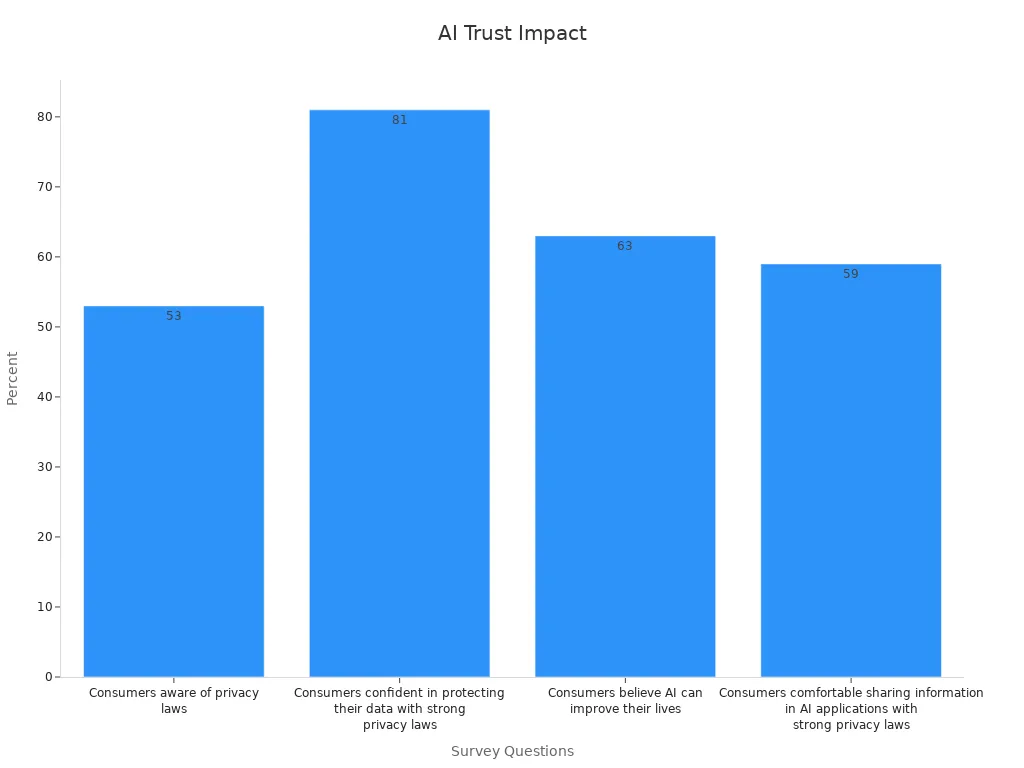
Privacy plays a critical role in how you perceive AI technologies. Many people feel uneasy about sharing personal information with AI applications. However, strong privacy laws can alleviate these concerns. A survey showed that 81% of consumers feel confident in protecting their data when robust privacy regulations are in place. Additionally, 59% are comfortable sharing information with AI applications under such laws. These findings suggest that clear privacy protections can enhance trust in AI systems.
The Ethical Implications of Misinformation
AI-generated celebrity content often spreads misinformation, which undermines public trust. For example, 40% of people reported seeing a video or image of a celebrity and believing it was real. This statistic underscores the ethical responsibility of creators to ensure their content does not deceive audiences. Ethical guidelines and advanced detection tools can help mitigate the spread of false information, preserving trust in digital media.
As AI continues to evolve, you must remain vigilant. Advocating for transparency, ethical practices, and strong privacy protections can help rebuild trust in AI-generated content. By staying informed and critical, you can navigate the challenges posed by this technology.
Technical Risks of AI-Generated Celebrity Content
Spread of Misinformation
AI-generated content has become a powerful tool for spreading misinformation. YouTube channels often use AI to create misleading videos about Black celebrities. These videos mix real news with fabricated stories, making it hard for viewers to separate fact from fiction. For example, a deepfake detection expert discovered that audio in videos about T.D. Jakes was likely AI-generated. This shows how advanced technology can create convincing but false narratives.
Misinformation spreads quickly because AI-generated content looks and sounds real. When you see a video or image online, it’s easy to believe it’s authentic. This makes it crucial to verify the source of the content before sharing it. By staying cautious, you can help reduce the impact of false information.
Challenges in Moderating AI Content
Moderating AI-generated content is a complex task. Generative AI can produce high-quality content rapidly, making it difficult to control its spread. For instance, AI-generated media has been used to mislead the public on critical issues like voting. Current moderation systems struggle to keep up with the speed and quality of AI-generated content.
One major challenge is the reliance on specific training data. Moderation tools often fail to detect content created by new AI algorithms. Additionally, many detection tools are not user-friendly, which limits their effectiveness. The rapid evolution of AI technology further complicates moderation efforts. To address these challenges, you should support the development of better tools and advocate for stricter regulations.
Limitations of AI Detection Tools
AI detection tools face significant limitations. These tools often perform well on training datasets but fail when tested on new content. For example, detection models struggle to identify manipulated media involving individuals with skin disorders or children. This lack of accuracy makes it harder to trust these tools.
Another issue is the adversarial nature of detection tools. As new manipulation techniques emerge, existing tools quickly become outdated. This creates a constant race between AI developers and detection systems. To improve detection, researchers need to focus on creating tools that can adapt to new forms of AI-generated content. By staying informed, you can better understand the risks and limitations of these technologies.
Risks of Unintended AI Outcomes
AI-generated content often produces unintended outcomes that can lead to serious consequences. These outcomes arise when AI systems generate media that deviates from their intended purpose or creates harmful effects. You might encounter these risks in the form of misinformation, exploitation, or ethical dilemmas.
One major concern is the creation of fake celebrity images. Nvidia's research demonstrated how generative adversarial networks (GANs) can produce photorealistic images of non-existent celebrities. These images are generated using data from real celebrity photos, making them highly convincing. While this technology showcases AI's creative potential, it also raises concerns about misinformation. Fake celebrity images can spread quickly online, misleading audiences and damaging public trust.
Another risk involves the misuse of AI-generated content in unexpected ways. For example, AI systems designed for entertainment might inadvertently create harmful or offensive material. This happens when the training data contains biases or lacks diversity. You might see AI-generated videos or images that reinforce stereotypes or misrepresent certain groups. These unintended outcomes highlight the importance of using diverse datasets and conducting regular audits to ensure ethical AI practices.
AI systems can also produce content that violates privacy or intellectual property rights. When AI generates media using unauthorized data, it can lead to legal disputes and reputational harm. For instance, an AI-generated video might use a celebrity's likeness without consent, resulting in privacy violations. These risks emphasize the need for stricter regulations and transparency in AI content creation.
To mitigate these risks, you should advocate for responsible AI development. Supporting initiatives that promote ethical guidelines and advanced detection tools can help reduce unintended outcomes. By staying informed and cautious, you can navigate the challenges posed by AI-generated content effectively.
Mitigating Risks in AI-Generated Celebrity Content
Legal Safeguards and Compliance
To address the risks of ai-generated content, you need to understand the importance of legal safeguards. These measures protect individuals and ensure compliance with evolving frameworks. For instance, balancing free speech with individual rights is essential. You should also consider fair use exemptions for news, parody, and artistic expression. Restricting deceptive or exploitative uses of ai-generated content is another critical step.
Governments and organizations emphasize transparency and accountability in content creation. Clear disclosure about ai usage helps you identify whether content is authentic. Accountability ensures that creators and companies take responsibility for their work. Tools for verifying the authenticity of ai-generated content are also vital. Regular audits and governance policies further strengthen compliance with copyright laws.
| Recommendation | Description |
|---|---|
| Transparency | Emphasize the need for clear disclosure about AI usage in content creation. |
| Accountability | Ensure that creators and companies are held responsible for the content generated. |
| Content Verification | Implement tools to verify the authenticity of AI-generated content. |
| Governance Policies | Establish clear policies for the management of AI-generated content. |
| Regular Audits | Conduct audits to ensure compliance with emerging regulations. |
You should also verify user consent before using their likeness in ai-generated content. Tracking licensing agreements ensures compliance with copyright laws. Developing mechanisms to quickly remove or correct false information is equally important.
Ethical Guidelines for AI Use
Ethical guidelines play a crucial role in mitigating the risks of ai-generated content. These guidelines ensure that ai content respects privacy, security, and transparency. For example, ai content should never mislead or manipulate people. Transparency about ai usage allows you to make informed decisions when interacting with digital media.
Organizations like the Partnership on AI and AI4People are creating global ethical guidelines. These frameworks promote responsible ai use and emphasize the importance of oversight. Industry leaders like ElevenLabs and FameFlow focus on ethical practices in audio and marketing. YouTube’s DreamTrack empowers artists while maintaining ethical standards.
Governments are also drafting laws to regulate ai use. Disclosure requirements ensure that you can distinguish between human-created and ai-generated content. By supporting these initiatives, you contribute to a safer and more trustworthy digital environment.
Advanced AI Detection Tools
Advanced ai detection tools are essential for identifying and managing ai-generated content. These tools help you verify the authenticity of media and prevent the spread of misinformation. However, current detection tools face limitations. They often struggle with new manipulation techniques and lack adaptability.
To improve detection, researchers focus on creating tools that can handle diverse data. For example, detection models must accurately identify manipulated media involving individuals with unique features. Regular updates and audits ensure that these tools remain effective.
You should advocate for the development of user-friendly detection tools. These tools empower you to identify false content quickly. Supporting initiatives that promote transparency and accountability in ai-generated content further strengthens your ability to navigate digital risks.
Promoting Transparency and Accountability
Transparency and accountability are essential for managing the risks of AI-generated celebrity content. When creators disclose the use of AI in their work, it helps you understand the nature of the content. This clarity reduces misunderstandings and builds trust. For example, knowing that a video of a celebrity is AI-generated allows you to evaluate its accuracy and intent more effectively.
Organizations and researchers emphasize the importance of transparency in AI content creation. A study highlights how transparency can set realistic expectations and prevent feelings of deception. It also shows that disclosing AI use enhances the value of the content and aligns with ethical practices. These findings underline the role of transparency in fostering accountability and trust.
| Evidence | Explanation |
|---|---|
| Transparency about AI usage can set more realistic expectations about the content and reduce misunderstanding concerning the helpfulness or accuracy of the content. | This supports the idea that transparency is crucial for managing consumer expectations and trust in AI-generated content. |
| Transparency can mitigate risks when using AI to develop content. Customers won’t feel deceived. | This highlights the role of transparency in fostering trust and reducing feelings of deception among consumers. |
| Disclosing AI use enhances the value of the content. It can improve its internal governance as well as its acceptance by readers. | This indicates that transparency not only builds trust but also aligns with organizational values, promoting accountability. |
To promote accountability, creators must take responsibility for their AI-generated content. Clear authorship ensures that you know who is behind the work. This practice strengthens trust and encourages ethical behavior. Following established guidelines for AI use also helps maintain high standards in content creation. By supporting transparency and accountability, you contribute to a safer digital environment.
Public Education on AI Content
Public education plays a vital role in helping you navigate the challenges of AI-generated celebrity content. When you understand how AI works, you can better identify misleading or harmful media. Educating yourself and others creates a more informed and digitally literate community.
Several strategies have proven effective in raising awareness about AI risks. First, adopt a skeptical mindset. Avoid taking content at face value and cross-check information with trusted sources before sharing it. Second, stay informed about the latest AI developments. Share your knowledge with friends and family to spread awareness. Third, support ethical media practices. Advocate for responsible content creation and encourage media outlets to follow established guidelines.
- Be Skeptical: Avoid taking content at face value. Cross-check information with trusted sources before sharing it.
- Educate Yourself and Others: Stay informed about the latest AI developments and share knowledge with others to create a more digitally literate community.
- Support Ethical Media: Advocate for responsible content creation and media integrity.
Public education also involves teaching people about the importance of authorship and accountability in AI-generated content. When you know who created a piece of media, you can assess its credibility more effectively. By promoting these values, you help reduce the spread of misinformation and foster trust in digital media.
AI-generated celebrity content poses risks that affect privacy, trust, and public perception. You face challenges like misinformation, exploitation, and ethical dilemmas. Legal safeguards, ethical guidelines, and advanced tools help mitigate these risks. By understanding these measures, you can navigate AI's impact responsibly.
Responsible AI use protects privacy and fosters trust. Advocating for transparency and accountability ensures ethical practices. Educating yourself and others about AI strengthens your ability to identify misleading content. When you support these efforts, you contribute to a safer digital environment.
FAQ
What is AI-generated celebrity content?
AI-generated celebrity content refers to media created by artificial intelligence that mimics a celebrity's voice, image, or likeness. This includes videos, photos, or audio clips that appear realistic but are entirely artificial. You might see these in entertainment, marketing, or even as viral social media posts.
How can you identify AI-generated content?
Look for inconsistencies in the media, such as unnatural movements, mismatched audio, or distorted features. Use AI detection tools to verify authenticity. Always check the source of the content. If it seems too unusual or perfect, it might be AI-generated.
Is it legal to use a celebrity’s likeness with AI?
Using a celebrity’s likeness without consent can violate intellectual property and privacy laws. Some regions require explicit permission for such use. Always ensure you have legal rights or licenses before creating or sharing AI-generated content involving public figures.
Why is transparency important in AI-generated content?
Transparency helps you trust the content you consume. When creators disclose AI involvement, it reduces confusion and prevents misinformation. Knowing the origin of media allows you to make informed decisions and promotes ethical practices in digital spaces.
How can you protect yourself from AI-generated misinformation?
Stay skeptical of viral content. Verify information through trusted sources before sharing. Use AI detection tools to check authenticity. Educate yourself about AI technologies and their risks. By staying informed, you can avoid falling for misleading or harmful media.
See Also
Explore Alternative NSFW Character AI Options for 2025
The Dangers of Circumventing NSFW Filters in Character AI
2025 Reviews of Leading NSFW AI Character Generators