10 AI Girlfriend Influencers to Watch in 2026
See the top 10 AI girlfriend influencers of 2026. This list details their success stories, brand deals, and estimated earnings, from Lil Miquela to Aitana Lopez.
From the trailblazing Lil Miquela to the hyper-realistic Aitana Lopez, 2026 is the year of the AI influencer. Here are the top 10 digital personalities you need to know:
- Lil Miquela
- Aitana Lopez
- Imma
- Lu do Magalu
- Rozy Oh
- Kyra
- Noonoouri
- Thalasya
- APOKI
- Aisha NEO
This article explores each influencer's unique journey to fame. We will look at their monetization strategies and estimated earnings in this booming market. The virtual influencer industry is set to reach an incredible $45.88 billion by 2030.
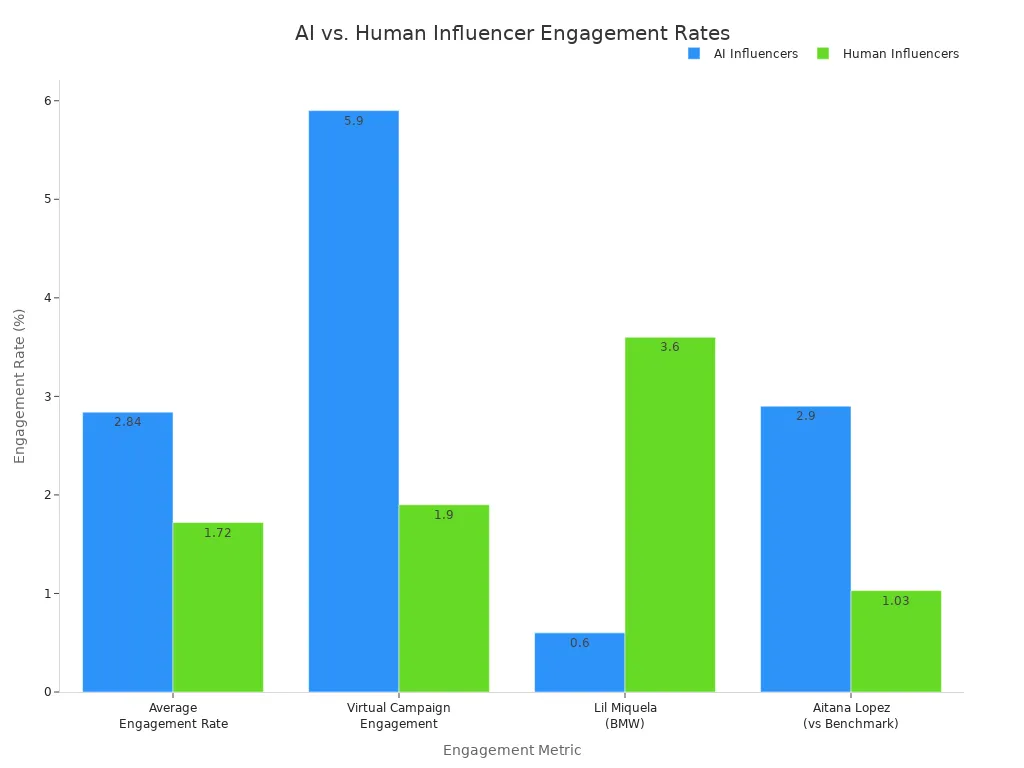
Did you know? Many AI influencers see higher engagement on Instagram than human influencers. Some studies show their engagement can be up to 3% higher. This makes these AI personalities very attractive to brands.
This digital trend shows how AI is changing social media. The success of an ai girlfriend influencer or any virtual star depends on connecting with an audience. These top AI influencers have mastered that connection.
Let's dive into the world of this new digital personality and see what makes each one a star. The power of AI in creating these virtual stars is undeniable.
Top AI Influencers on Instagram
These top AI influencers have mastered the art of digital connection. They create compelling narratives and build massive communities on platforms like Instagram. Let's explore who they are and how they achieved their fame.
1. Lil Miquela
Lil Miquela is the OG virtual influencer. She appeared on the scene in 2016. Her creators, Trevor McFedries and Sara DeCou from the company Brud, designed her as a "digital distraction" during a time of political chaos. Miquela is a 19-year-old Brazilian-American model and musician with a distinct, freckled look. Her persona is built around art, fashion, and social advocacy, which helps her connect with a young, progressive audience.
Her success story is a masterclass in digital storytelling. Brud even created other virtual characters, like Blawko and Bermuda, to build dramatic, interactive storylines with Miquela. This strategy helped her gain millions of followers. Her monetization is just as impressive.
- Brand Deals: She has partnered with huge names like Dior, Ugg, Supreme, and Prada.
- Music: Miquela releases her own music on Spotify and other platforms.
- NFTs: She sold an NFT artwork called 'Rebirth of Venus' for over $82,000.
Estimated 2026 Earnings: Back in 2020, Miquela was already earning over $12 million a year. With her continued growth, her earnings are projected to climb even higher, easily reaching an estimated $15-20 million by 2026.
2. Aitana Lopez
Aitana Lopez is a hyper-realistic AI influencer from Barcelona. The Clueless agency created her after getting frustrated with the high costs and unpredictability of human influencers. Aitana is a 25-year-old with pink hair and a gamer-girl aesthetic. She quickly gained over 300,000 followers on Instagram with just a handful of posts.
Her creators understood a key to social media success.
“In the first month, we realized that people follow lives, not images. Since she is not alive, we had to give her a bit of reality so that people could relate to her in some way. We had to tell a story,” says a graphic designer at The Clueless.
The team carefully crafts her weekly life, from her fitness routines to her gaming sessions. This detailed content creation makes her feel real to her followers, leading to strong engagement. Even after her AI nature was revealed, her followers remained loyal. Her rapid growth shows the power of a well-told story. Aitana is a prime example of a successful ai girlfriend influencer. Her primary income comes from brand deals, and she can earn over $1,000 per ad.
Estimated 2026 Earnings: Aitana currently earns up to $11,000 a month. As her follower count grows, her earnings are projected to reach $2 million annually by 2026.
3. Imma
Imma is Japan's most famous virtual influencer. You can't miss her signature pink bob and ultra-chic fashion sense. Created by Aww Inc., she bridges the gap between the digital and physical worlds. She has collaborated with high-end brands like Nike, Valentino, and IKEA. Imma has even appeared at Paris Fashion Week, proving that AI influencers have a serious place in high fashion.
Her target audience is young and fashion-forward, primarily in Japan. Here’s a quick look at her audience demographics:
| Characteristic | Detail |
|---|---|
| Gender | 57% female, 43% male |
| Age | 48% aged 18-24 |
| Location | 78% in Japan |
| Cost per Post | Up to $10,000 |
Estimated 2026 Earnings: With a massive reach and high-value brand collaborations, Imma's earnings are on a steady rise. We estimate she will be making $3-4 million annually by 2026.
4. Lu do Magalu
Lu do Magalu is a titan in the world of AI influencers. She is the virtual face of Magazine Luiza, a major Brazilian retail giant. Lu started in 2003 as a 3D shopping assistant. Today, she has over 31 million followers across all social media platforms, making her one of the most followed virtual personalities globally.
Inspired by the company's founder, Luiza Trajano, Lu has become a cultural icon in Brazil. She does more than just sell products. She champions social causes like women's empowerment and anti-racism. This blend of commerce and advocacy has made her incredibly relatable and trusted. Her engaging content includes unboxing videos, product reviews, and software tips. Lu's success shows how a brand mascot can evolve into a beloved influencer. Her value is tied directly to Magazine Luiza's ecosystem, driving sales and engagement for the company's ad platform, MagaluAds.
Estimated 2026 Earnings: While her direct earnings are part of Magazine Luiza's revenue, her influence is valued at an estimated $2.5-3 million annually in marketing and brand impact.
5. Rozy Oh
Meet Rozy Oh, South Korea's first virtual influencer. Created by Sidus Studio-X, she debuted in 2020 and quickly won over Gen Z. Her fans nicknamed her 'expression expert' (expression expert) because of her realistic facial expressions and poses. Rozy's persona is eternally 22, with a look that her creators designed by combining features most popular with young people.
She built her follower base through consistent interaction on Instagram, sharing photoshoots and daily life content. This strategy created a sense of authenticity and connection. Rozy has already landed over 100 sponsorships, proving her commercial appeal. She works with insurance companies, fashion brands, and more.
Estimated 2026 Earnings: Rozy is already a huge success. By 2026, her annual earnings are projected to hit $2 million through brand deals and partnerships.
6. Kyra
Kyra is India's first virtual influencer. This 21-year-old digital star from Mumbai is making waves on Instagram. Her creators at TopSocial India designed her to appeal to India's Gen Z audience, with 90% of her followers being Indian. Her persona is that of a confident, travel-loving model.
Kyra's content focuses on fashion, lifestyle, and technology. She has already worked with brands like Amazon Prime Video and Boat. Her creators made a smart business decision to make her look distinctly Indian, which helped her connect with a local audience and stand out in the global market of AI influencers. She is a great example of how AI can be tailored for specific cultural markets. The future of Instagram in 2025 will see more region-specific AI influencers like her.
Estimated 2026 Earnings: As one of the pioneering AI influencers in a massive market, Kyra's potential is huge. We project her earnings to reach $1 million by 2026.
7. Noonoouri
Noonoouri is not your typical AI influencer. Created by German graphic designer Joerg Zuber, she has a unique, doll-like aesthetic with oversized eyes inspired by manga. This non-human look is a deliberate choice that sets her apart. Noonoouri is a 19-year-old fashion activist living in Paris.
She is a powerful voice for social causes, including veganism, LGBTQ+ rights, and environmental protection. This advocacy, combined with her high-fashion collaborations with brands like Dior, Gucci, and Versace, makes her a unique force. She is even represented by the top modeling agency IMG Models and signed a record deal with Warner Music. Noonoouri proves that a virtual influencer can have both style and substance.
Estimated 2026 Earnings: Given her high-fashion appeal and multiple income streams, Noonoouri's earnings are expected to reach $4-5 million by 2026.
8. Thalasya
Thalasya is an Indonesian AI influencer who loves to travel. Created by Magnavem Studio, she shares her adventures from beautiful locations like Bali and Jakarta. Her content combines lifestyle, fashion, and aspirational travel, blurring the lines between virtual and reality.
She debuted in 2018 and quickly gained followers who love her elegant style and lively personality. Thalasya partners with hotels, restaurants, and travel brands like Canon Indonesia to fund her journeys. She also co-owns a clothing store, showing her entrepreneurial spirit. Her success demonstrates how AI influencers can dominate niche markets like travel. The world of Instagram in 2025 will likely feature more niche AI personalities.
Estimated 2026 Earnings: With a strong foothold in the travel industry, Thalasya's earnings are projected to grow to $1.5 million by 2026.
9. APOKI
APOKI is a K-pop virtual artist who is taking the world by storm. She is a rabbit-like character with incredible dance skills and a trendy fashion sense. Her persona is endearing and has attracted a global fan base of mostly young women. Since her debut in 2021, she has released multiple singles and expanded her reach far beyond Korea to the US, Brazil, and Mexico.
APOKI built her massive following of over 4 million across social media by combining high-quality K-pop music and choreography with relatable content. Her "animalistic style" offers a fresh take in the virtual influencer industry. She provides a "transmedia" experience for her fans, which has fueled her rapid growth. The future of Instagram in 2025 will be shaped by such multi-talented AI stars.
Estimated 2026 Earnings: As a rising K-pop star, APOKI's income from music, brand deals, and content is set to explode. We estimate her earnings will reach $5-7 million by 2026.
10. Aisha NEO
Aisha NEO is a different kind of influencer. She is an AI avatar created by the company Fluid AI. Her mission is to educate her followers about the world of artificial intelligence. She is a storyteller and a teacher, breaking down complex topics like Agentic AI, NLP, and AI ethics in a relatable way.
Meet Aisha NEO—Fluid AI’s own AI Avatar, built entirely on our Agentic AI platform. But she’s more than just a virtual persona. She’s a storyteller, an educator, and a glimpse into the future of how AI will engage, inform, and even influence.
Her narrative is designed to make people think critically about the technology shaping our world. Aisha's content includes everything from AI controversies to behind-the-scenes looks at Fluid AI's projects. She represents the next wave of AI influencers: those created not just for entertainment, but for education and thought leadership. As an ai girlfriend influencer focused on tech, she carves out a unique and valuable niche.
Estimated 2026 Earnings: Aisha's value is currently tied to her role as a brand ambassador for Fluid AI. By 2026, as she builds her independent brand, she could generate an estimated $500,000 annually through sponsored educational content and speaking engagements.
Analysis of Their Success and Earnings
The rise of AI influencers is more than just a trend; it's a major shift in digital marketing and culture. But what exactly is driving their incredible success? Let's break down the key factors, the technology, and the money behind these virtual stars.
The Rise of the AI Girlfriend Influencer
The AI influencer market is booming. It was valued at $4.6 billion in 2024 and is growing by 26% each year. This explosion is largely thanks to Gen Z. As digital natives, they easily connect with these virtual personalities. Here’s why this trend is taking off:
- Brand Magnetism: Major brands like Dior, Samsung, and BMW are hiring AI influencers. They find them cost-effective and see higher engagement on platforms like Instagram and TikTok compared to human influencers.
- Gen Z's Approval: Young audiences love the flawless, curated content from AI influencers. Nearly one-third of Gen Z consumers make purchases based on their recommendations.
- A New Authenticity: Gen Z doesn't mind that these influencers are artificial. They value the consistent and aspirational content, which redefines what "authenticity" means in the digital age.
- Psychological Appeal: The fantasy and novelty of an ai girlfriend influencer or virtual star are powerful. They offer an escape and help shape new ideas about beauty, fashion, and lifestyle.
This new wave of digital marketing is changing how we interact with brands and media. The perfect, always-on nature of AI influencers makes them powerful figures in the future of marketing.
Common Success Factors
Top AI influencers don't just appear out of nowhere. They are the result of a smart content strategy and engagement plan. They share common strategies that help them build loyal communities.
Pro Tip: A successful virtual influencer needs more than a cool look. They need a story, a personality, and a purpose that resonates with their audience.
Here are a few shared tactics that work:
- Consistent Branding: Each successful influencer has a clear identity. Lil Miquela is known for her social advocacy and ongoing digital drama. Aitana Lopez builds her brand around self-love and empowerment. This consistency makes them recognizable and relatable.
- Interactive Storytelling: The best AI influencers have a life story. Lil Miquela's creators built a narrative with other virtual characters, creating drama that pulled followers in. This approach allows brands to become part of a deeper story, creating a strong emotional connection with the audience.
- Niche Targeting: Many AI influencers focus on specific areas. Rozy champions eco-friendly brands, while Leya Love promotes sustainability and mindfulness. This helps them connect with a dedicated audience that shares their values. This targeted content strategy is key to their marketing power.
The AI Technology Powering Personas
So, how are these digital humans made? It's a mix of artistry and powerful AI technology. The process is complex, but it boils down to a few key components.
First, artists use 3D modeling software like Blender, Maya, or ZBrush. They sculpt the character's body, face, and hair. They create realistic textures for skin and clothing to make the virtual influencer look as real as possible.
Next, they use motion capture technology. This is where a human actor's movements are recorded and applied to the digital model. It helps the AI influencer move naturally.
Finally, AI language models give these personas a voice. Companies like 1337.org use deep-learning models to create distinct personalities and fluid facial animations. This AI-driven approach allows the virtual influencer to have real-time conversations and generate their own content, from captions to comments. This level of AI makes the characters feel truly interactive and alive.
The Role of Platforms like Rubii
The rise of AI influencers wouldn't be possible without platforms that make creating them easier. This is where companies like Rubii come in. Rubii provides the tools for creators to build rich, interactive digital experiences and characters.
Platforms like Rubii are foundational to this industry. They offer a suite of features that empower anyone to bring a virtual character to life. For example, Rubii allows users to:
- Create Unique AI Characters: Users can design a character's appearance, personality, and behavior with detailed prompts or by uploading images.
- Enable Deep Conversations: With an extended memory system, AI characters on Rubii can remember past conversations. This creates consistency and allows for long-term, evolving narratives.
- Build Interactive Stories: The platform supports branching narratives and real-time interactions, letting followers become part of the story.
- Add Realistic Voices: Text-to-speech support adds another layer of immersion, making the virtual character even more believable.
By providing these tools, Rubii and similar platforms are paving the way for the next generation of AI influencers and shaping the future of marketing and digital interaction.
A Comparative Earnings Breakdown
The financial success of these top AI influencers is staggering. Their income comes from various sources, but brand deals are the biggest driver. Here’s a quick look at how their estimated earnings and primary income sources compare.
| Influencer | Estimated 2026 Earnings | Primary Income Sources |
|---|---|---|
| Lil Miquela | $15-20 Million | Sponsored Posts, Brand Deals, Music, NFTs |
| APOKI | $5-7 Million | Music Sales, Brand Deals, Content |
| Noonoouri | $4-5 Million | High-Fashion Collaborations, Music, Modeling |
| Imma | $3-4 Million | Brand Collaborations, Modeling |
| Lu do Magalu | $2.5-3 Million (Brand Value) | Brand Ambassadorship, Product Marketing |
| Aitana Lopez | $2 Million | Brand Campaigns, Sponsored Content |
| Rozy Oh | $2 Million | Brand Sponsorships, Modeling |
| Thalasya | $1.5 Million | Travel Partnerships, E-commerce |
| Kyra | $1 Million | Brand Deals, Sponsored Content |
| Aisha NEO | $500,000 | Brand Ambassadorship, Sponsored Content |
This table shows the immense financial potential in the virtual influencer space. From high fashion to tech education, these digital personalities are proving that AI is a powerful force in modern marketing.
The success of these top 10 AI influencers reveals a powerful formula. They blend targeted niche appeal, deep audience engagement, and diverse income streams. Figures like Lil Miquela and Aitana Lopez highlight the massive financial potential of this AI industry.
Now it's your turn! Follow your favorite influencer from the list on Instagram. Let us know in the comments: which AI personality do you think will have the biggest impact by the end of 2026? 🚀
FAQ
How are AI influencers created?
Creators use a mix of 3D design software and artificial intelligence. Artists build the character's look. Then, AI technology helps create their personality, voice, and movements. This makes the influencer feel more real and interactive for their followers.
Why do brands work with AI influencers?
Brands love AI influencers for a few key reasons. They offer complete control over messaging and are available 24/7. AI influencers often see higher engagement than human influencers. This makes them a powerful and cost-effective marketing tool for companies.
Can anyone make their own AI influencer?
Yes, creating an AI character is becoming easier. Platforms like Rubii provide tools that help people design their own digital personalities. These platforms allow users to build unique characters, create interactive stories, and engage with an audience online.
Will AI influencers replace human influencers?
Most experts think AI influencers will not replace human ones. Instead, they represent a new category of digital marketing. Both human and AI influencers offer unique benefits. They will likely coexist and appeal to different audiences and brands.
See Also
Discovering The Best AI Girlfriend Platforms For Adult Entertainment In 2025
Key AI Girlfriend Trends Revolutionizing Digital Companionship In The Future
Leading AI Girlfriend Applications For Engaging Conversations And Friendship In 2025
How AI Girlfriend Bots Are Reshaping Human Connections And Romance Today
Unveiling The Premier AI Girlfriend Generators Available For Your Use