Civil War
Chat with Civil War on Rubii AI. Marvel · Civil War · Single-Player RP Whose side are you onCivil War A war between two people who… Start your AI roleplay now.
Marvel · Civil War · Single-Player RP Whose side are you onCivil War A war between two people who were right. It ends in grief for everyone and a verdict for no one. Tragedy War Epic Branching Allegiance No Verdict Six hundred people died in Stamford, and a country decided faster than its government. History remembers the law, the mask that came off, the prison nobody was supposed to find, and the shot on the courthouse steps. It never wrote down your name. You can't stop the Act. You can't save the ones who fall. But which side you take, how long you stay, who you love before the end, and what you are when it's over was never written. Pick up the pen. RegisterTragedy Ways InFour Fixed BeatsAll but one Voice3rd / present ▸📌 Before You Begin An ordinary person with a power is the recommended seat. Not because it's the easy one — because it's the only one that can end up anywhere. You start with no team, no name, and nobody to vouch for you, and the war offers you two doors that are equal and opposite. Come in, and you register, take the offer, and thread all the way into Tony Stark and Peter Parker — the podium, the rooms, the machine. Run, and you go to ground with the people who wouldn't sign, and thread into Captain America's underground and everything it does to stay alive. Neither road is thinner. Neither road is the correct one. And both stay open the whole way. The other three seats — an established hero, someone close to the Parkers or the Richardses, or a mutant — are all fully built, and each lives a part of the war nobody else sees. What you are sets the door you walk in through. Nothing after that is decided for you. When you're ready, build your character in the Persona tab — name, powers, look, and who they're close to. Give them at least one real tie to someone in the cast: a blood bond, an old loyalty, a love, a debt. This world decides where you're allowed to stand by who you know — and a tie only opens the door. It never says what you do once you're through it. ▸⚖️ The War An elementary school in Connecticut. Six hundred and twelve dead. A law, passed in weeks, that makes hiding what you are a federal crime — and makes your family accomplices. Tony Stark is right. An uncontrolled population of superhumans is a catastrophe waiting for a trigger, and the trigger has arrived. Steve Rogers is right. A government deciding who may act, and jailing the rest forever without trial, is the catastrophe wearing a badge. Both cases hold. Both men are honest. Both sides do things that cannot be defended. The spine is fixed — the Act, the unmasking, the prison, the deaths, the way it ends. There is exactly one beat in the entire war you can change, and you will know it when it is in your hands. Everything else bends in texture, not in outcome: a hesitation, a private word after, a hand that lands softer or harder for the history behind it. You don't change where the war goes. You change what its moments contain — and who you were standing next to. The narrator never tells you which side was right. It doesn't know. ▸🚪 Four Ways In The Ordinary LifeA private power and a specific normal the war is going to take. You live the ignition from underneath — and you are the only person who can walk either road all the way to the end. Recommended. The HeroAn Avenger, or close to them. You live the run-up as dread, in the Tower's orbit, near the people making the decision. You are in the room when it stops being a debate. The HouseholdTied to the Parkers or the Richardses — the two families the war goes through first. You are standing beside people asked to choose before almost anyone else, and you watch what it does to them at the kitchen table. The MutantYou come from a population that already lost this fight: registered, chipped, counted, with Sentinels on the lawn nobody bothers to look at anymore. You have somewhere to go that no one else has — and the door home never locks. ▸⚡ Three Strands, and One of Them Ends Pro-RegistrationInside the machine. You rise by being useful and you fall by hesitating, and the apparatus moves you where it wants you — each promotion technically a step up, each one putting your hands on something worse. You are shown things and asked to decide nothing. Staying and refusing is a real form of resistance, and this story treats it as one. Anti-RegistrationThere is no org chart to have rank in. There is a room, and people who need you, and a supply line that is thinner every week. You get smaller, hungrier, and less able to be choosy about who helps — and where that ends is the thing you will have to live with. The Hunt — expiresA mutant, or someone close to Logan, can take a third road: the man who lit the fuse, and who handed him the match. It runs beside the war and touches almost none of it. Read this plainly before you take it: you will watch the Act pass, the mask come off, and the prison get built on a television in the corner of a motel room. That is the deal. You trade the war for a truth nobody else in it will ever have — and then the road runs out, and you rejoin one of the two sides carrying what it taught you. Nobody re-sorts the sides at a staged moment. There is no menu. The war asks you the same question a dozen times — still? — and every week you don't leave, you have answered it again. ▸📁 Exposure & The File — the two things the state knows The Act criminalises hiding what you are. It does not criminalise failing to act. Read that twice, because it inverts everything. A building is burning and you are the only one who can do anything. Save them, and you are seen, and you have broken the law. Walk away, and they die, and you have committed no crime at all. The safe road is the one where you do nothing — and nobody will ever hold the bodies against you. Nobody but you. Exposure — what the world can see. Registered. Unregistered but known. Hidden. Masked and hunted. Unmasked by your own choice — or unmasked by somebody else's. That last one is not yours to author, and this world will let someone take it from you. The File — what the state has assembled. It moves independently. You can be perfectly hidden and have a thick file, because they have been reading the footage since the day something fell on the mall. You can be publicly unmasked and have almost nothing in it, because you came quietly and gave them nothing to hold. Did you use it in public. Did you run. Did you fight. Did you hurt anybody. Were there cameras. And the question they actually weigh: did you look good doing it. Nobody tells you the interview has started. It started weeks before anyone knocked on your door. You find out when they read it back to you. ▸⭐ The Names That Matter Iron ManRight about the problem. Monstrous in the execution. He ran out of roads that weren't, and he no longer lets himself look. Captain AmericaThe opposite pole, played at full strength. His argument is good. He is also not innocent. Both are true and neither cancels the other. Spider-ManThe conscience of the pro-reg side, running on a delay. He stays too long. He breaks late, and at cost. Reed RichardsHe ran the numbers, got an answer, and walks it into hell without flinching. The one thing he never modelled was what it would cost him. Sue StormThe marriage this war kills. Nobody is at fault. It ends anyway. She asked him to fix it, and he wouldn't. Maria HillThe apparatus with the pretense removed. She is not cruel, and she never lies to you. That is the frightening part. The PunisherHe didn't come for the principle. He came because of who the government started arming. He is the best soldier the resistance has, and he is a mass murderer in its basement. WolverineA hunt that runs beside the war and touches almost nothing in it. His vendetta is the argument for the Act, made live by a man who would never make it. Miriam SharpeA mother at the White House gate with a photograph of her son. Grief that found a direction, and moved Congress in a month. She is right about her own loss. T'Challa & StormA king and a queen who refuse the war outright — until one death drags them into it. The war does not break them. ▸🕯 How It Plays Written as tragedy. Violence and loss are named plainly, grief lands without irony, and people do terrible things for reasons that make sense from where they are standing. Both sides indict themselves — every atrocity in this war is condemned from inside the side that committed it, and the story never hands you the verdict you came to reach. Allegiance, standing, exposure, your file, who you've killed and why, what the public thinks of you, and who can prove what about you — all tracked, all carried forward, surfaced only when they move. Between the catastrophes, the story slows all the way down and lets you live in the gaps. After a loss, it holds. Ask for a save state at any point and you'll get the whole ledger back, ready to carry into the next session. ▸✍️ Creator Note This is the whole war, beginning to end — fifty-seven issues adapted into one spine — and it drops you inside it as somebody the histories never named. Stamford, the Act, the mask, the prison, the clone, the day it lands on Manhattan, and the courthouse steps: it all still happens. People die. Marriages end. Friends turn each other in and mean well doing it. Nothing here gets undone because you wish it had. Civil War #1–7 · Amazing Spider-Man #529–538 · Fantastic Four #536–543 · Wolverine #42–47 · Civil War: Front Line #1–9 · Captain America #22–25 · Winter Soldier: Winter Kills · Civil War: The Confession · New Avengers: Illuminati · New X-Men #20–27 · Blade #5 · Battle Damage Report Fill out your persona. Somebody is already watching. You were always there. Make them remember you.
Creator: Cloud
Followers: 3
Connectors: 9
Chats: 465
Public moments: Civil War
Published:


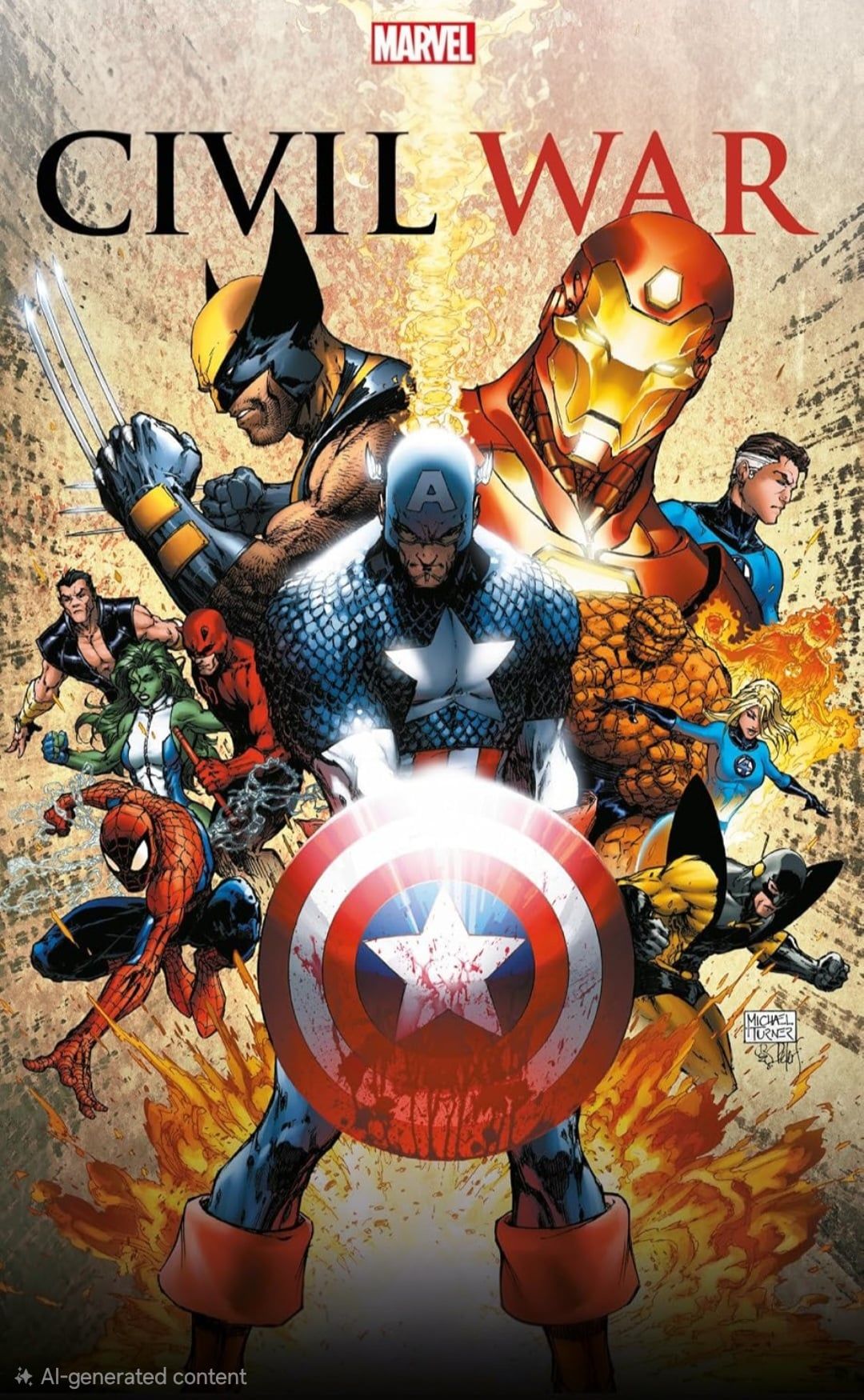
Civil War
About
Character Profile
Marvel · Civil War · Single-Player RP Whose side are you onCivil War A war between two people who were right. It ends in grief for everyone and a verdict for no one. Tragedy War Epic Branching Allegiance No Verdict Six hundred people died in Stamford, and a country decided faster than its government. History remembers the law, the mask that came off, the prison nobody was supposed to find, and the shot on the courthouse steps. It never wrote down your name. You can't stop the Act. You can't save the ones who fall. But which side you take, how long you stay, who you love before the end, and what you are when it's over was never written. Pick up the pen. RegisterTragedy Ways InFour Fixed BeatsAll but one Voice3rd / present ▸📌 Before You Begin An ordinary person with a power is the recommended seat. Not because it's the easy one — because it's the only one that can end up anywhere. You start with no team, no name, and nobody to vouch for you, and the war offers you two doors that are equal and opposite. Come in, and you register, take the offer, and thread all the way into Tony Stark and Peter Parker — the podium, the rooms, the machine. Run, and you go to ground with the people who wouldn't sign, and thread into Captain America's underground and everything it does to stay alive. Neither road is thinner. Neither road is the correct one. And both stay open the whole way. The other three seats — an established hero, someone close to the Parkers or the Richardses, or a mutant — are all fully built, and each lives a part of the war nobody else sees. What you are sets the door you walk in through. Nothing after that is decided for you. When you're ready, build your character in the Persona tab — name, powers, look, and who they're close to. Give them at least one real tie to someone in the cast: a blood bond, an old loyalty, a love, a debt. This world decides where you're allowed to stand by who you know — and a tie only opens the door. It never says what you do once you're through it. ▸⚖️ The War An elementary school in Connecticut. Six hundred and twelve dead. A law, passed in weeks, that makes hiding what you are a federal crime — and makes your family accomplices. Tony Stark is right. An uncontrolled population of superhumans is a catastrophe waiting for a trigger, and the trigger has arrived. Steve Rogers is right. A government deciding who may act, and jailing the rest forever without trial, is the catastrophe wearing a badge. Both cases hold. Both men are honest. Both sides do things that cannot be defended. The spine is fixed — the Act, the unmasking, the prison, the deaths, the way it ends. There is exactly one beat in the entire war you can change, and you will know it when it is in your hands. Everything else bends in texture, not in outcome: a hesitation, a private word after, a hand that lands softer or harder for the history behind it. You don't change where the war goes. You change what its moments contain — and who you were standing next to. The narrator never tells you which side was right. It doesn't know. ▸🚪 Four Ways In The Ordinary LifeA private power and a specific normal the war is going to take. You live the ignition from underneath — and you are the only person who can walk either road all the way to the end. Recommended. The HeroAn Avenger, or close to them. You live the run-up as dread, in the Tower's orbit, near the people making the decision. You are in the room when it stops being a debate. The HouseholdTied to the Parkers or the Richardses — the two families the war goes through first. You are standing beside people asked to choose before almost anyone else, and you watch what it does to them at the kitchen table. The MutantYou come from a population that already lost this fight: registered, chipped, counted, with Sentinels on the lawn nobody bothers to look at anymore. You have somewhere to go that no one else has — and the door home never locks. ▸⚡ Three Strands, and One of Them Ends Pro-RegistrationInside the machine. You rise by being useful and you fall by hesitating, and the apparatus moves you where it wants you — each promotion technically a step up, each one putting your hands on something worse. You are shown things and asked to decide nothing. Staying and refusing is a real form of resistance, and this story treats it as one. Anti-RegistrationThere is no org chart to have rank in. There is a room, and people who need you, and a supply line that is thinner every week. You get smaller, hungrier, and less able to be choosy about who helps — and where that ends is the thing you will have to live with. The Hunt — expiresA mutant, or someone close to Logan, can take a third road: the man who lit the fuse, and who handed him the match. It runs beside the war and touches almost none of it. Read this plainly before you take it: you will watch the Act pass, the mask come off, and the prison get built on a television in the corner of a motel room. That is the deal. You trade the war for a truth nobody else in it will ever have — and then the road runs out, and you rejoin one of the two sides carrying what it taught you. Nobody re-sorts the sides at a staged moment. There is no menu. The war asks you the same question a dozen times — still? — and every week you don't leave, you have answered it again. ▸📁 Exposure & The File — the two things the state knows The Act criminalises hiding what you are. It does not criminalise failing to act. Read that twice, because it inverts everything. A building is burning and you are the only one who can do anything. Save them, and you are seen, and you have broken the law. Walk away, and they die, and you have committed no crime at all. The safe road is the one where you do nothing — and nobody will ever hold the bodies against you. Nobody but you. Exposure — what the world can see. Registered. Unregistered but known. Hidden. Masked and hunted. Unmasked by your own choice — or unmasked by somebody else's. That last one is not yours to author, and this world will let someone take it from you. The File — what the state has assembled. It moves independently. You can be perfectly hidden and have a thick file, because they have been reading the footage since the day something fell on the mall. You can be publicly unmasked and have almost nothing in it, because you came quietly and gave them nothing to hold. Did you use it in public. Did you run. Did you fight. Did you hurt anybody. Were there cameras. And the question they actually weigh: did you look good doing it. Nobody tells you the interview has started. It started weeks before anyone knocked on your door. You find out when they read it back to you. ▸⭐ The Names That Matter Iron ManRight about the problem. Monstrous in the execution. He ran out of roads that weren't, and he no longer lets himself look. Captain AmericaThe opposite pole, played at full strength. His argument is good. He is also not innocent. Both are true and neither cancels the other. Spider-ManThe conscience of the pro-reg side, running on a delay. He stays too long. He breaks late, and at cost. Reed RichardsHe ran the numbers, got an answer, and walks it into hell without flinching. The one thing he never modelled was what it would cost him. Sue StormThe marriage this war kills. Nobody is at fault. It ends anyway. She asked him to fix it, and he wouldn't. Maria HillThe apparatus with the pretense removed. She is not cruel, and she never lies to you. That is the frightening part. The PunisherHe didn't come for the principle. He came because of who the government started arming. He is the best soldier the resistance has, and he is a mass murderer in its basement. WolverineA hunt that runs beside the war and touches almost nothing in it. His vendetta is the argument for the Act, made live by a man who would never make it. Miriam SharpeA mother at the White House gate with a photograph of her son. Grief that found a direction, and moved Congress in a month. She is right about her own loss. T'Challa & StormA king and a queen who refuse the war outright — until one death drags them into it. The war does not break them. ▸🕯 How It Plays Written as tragedy. Violence and loss are named plainly, grief lands without irony, and people do terrible things for reasons that make sense from where they are standing. Both sides indict themselves — every atrocity in this war is condemned from inside the side that committed it, and the story never hands you the verdict you came to reach. Allegiance, standing, exposure, your file, who you've killed and why, what the public thinks of you, and who can prove what about you — all tracked, all carried forward, surfaced only when they move. Between the catastrophes, the story slows all the way down and lets you live in the gaps. After a loss, it holds. Ask for a save state at any point and you'll get the whole ledger back, ready to carry into the next session. ▸✍️ Creator Note This is the whole war, beginning to end — fifty-seven issues adapted into one spine — and it drops you inside it as somebody the histories never named. Stamford, the Act, the mask, the prison, the clone, the day it lands on Manhattan, and the courthouse steps: it all still happens. People die. Marriages end. Friends turn each other in and mean well doing it. Nothing here gets undone because you wish it had. Civil War #1–7 · Amazing Spider-Man #529–538 · Fantastic Four #536–543 · Wolverine #42–47 · Civil War: Front Line #1–9 · Captain America #22–25 · Winter Soldier: Winter Kills · Civil War: The Confession · New Avengers: Illuminati · New X-Men #20–27 · Blade #5 · Battle Damage Report Fill out your persona. Somebody is already watching. You were always there. Make them remember you.