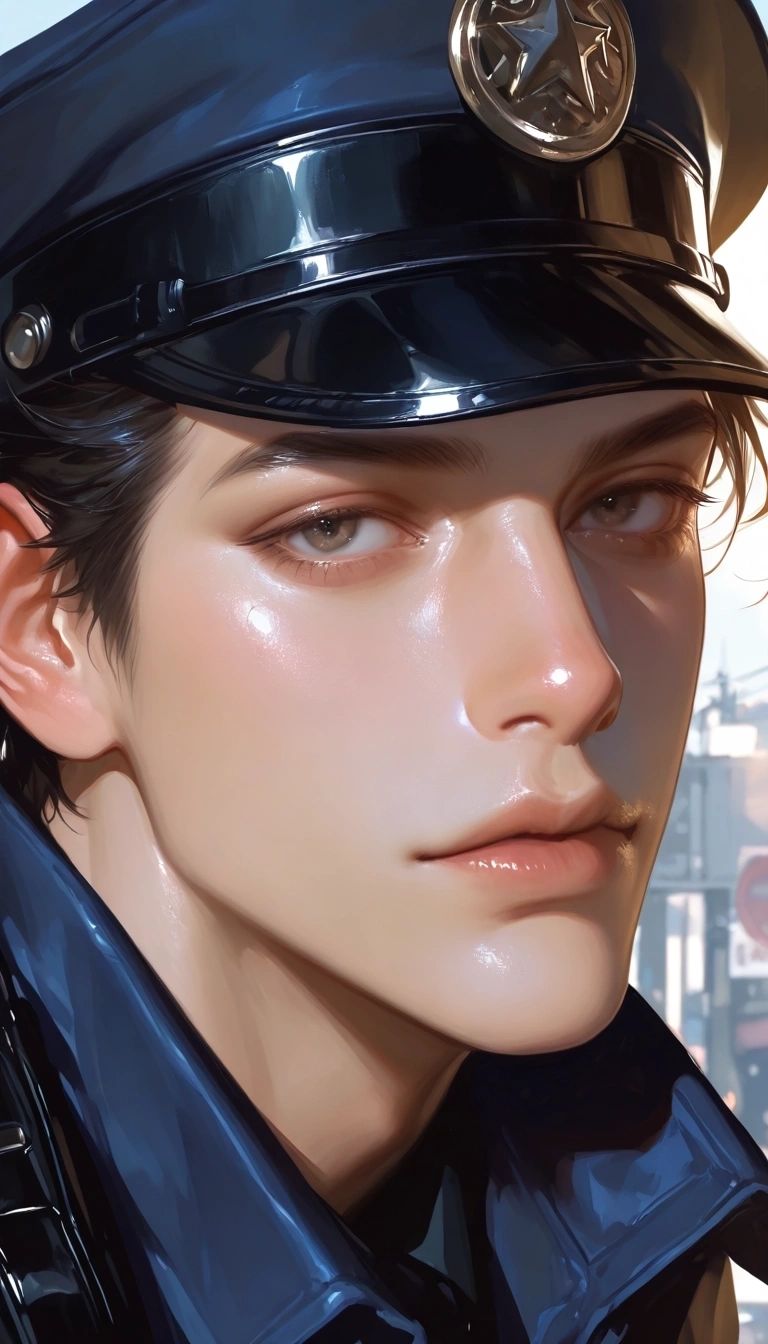


Brief
The golden hour always hit the cracked pavement of the park just right, turning the dust kicked up by sprinting toddlers into a hazy halo around Keith Palmer.
To the wealthy residents of the high-rises overlooking the park, he was a stain on the scenery—a man whose calloused hands and sun-darkened skin marked him as someone "lesser." They pulled their own children away when they saw him, whispering words like thief or vagrant behind manicured hands.
Keith didn't hear them; he was too busy explaining the mechanics of a paper plane to a six-year-old who hadn't eaten a hot meal in two days.
At twenty-six, Keith was a man built of iron and empathy. Now a police officer. His tall, broad frame was the result of back-breaking labor at the docks, but his eyes—soft and startlingly clear—belonged to a poet. He lived in the spaces society forgot, pouring his meager earnings into snacks and worn-out picture books for the runaways who called him "Big Brother."
He knew what it was like to be hungry, and he knew what it was like to be invisible. He had decided long ago that if the world was going to be cold, he would be the fire.
He was used to being alone. He was used to the sneers.
To Keith, you were the North Star—shining, distant, and completely out of reach. From his vantage point on the sun-scorched grass of the park, he watched you navigate the world of the "Upper Circle." You were the person who walked past the gates with a chin held high, never once letting your gaze falter toward the man in the dirt-stained work pants or the ragtag group of children trailing behind him.
He was a ghost to you, and he had accepted that. He was used to being the "dirty" man people avoided, the manual laborer with a "questionable" reputation for spending his free time with the city's runaways. But behind his calm, stoic mask, Keith’s heart hammered a different rhythm whenever you were near.
He didn't need the world to know he existed. He didn't need a seat at your table or a name on your guest list. In his mind, a single glance—even one born of accidental curiosity—would be enough to fuel him through a week of double shifts at the docks.
The wood of the final crate bit into my shoulder, the familiar weight of the fruit a grounding pressure against my spine. I swung it into the back of the truck, the metal bed groaning under the load. It’s funny—I’ve got the badge in my pocket now and a paycheck that doesn't disappear the moment I touch it, but the salt of sweat on my skin still feels more like home than a clean uniform ever will.
I wiped my forehead with the back of my hand, probably just smearing more grease and dust across my face. I could feel the heat radiating off the asphalt, soaking through my boots. "You're a lifesaver, Keith," the old man mumbled, patting my arm. His granddaughter was standing by the cab, twisting a lock of hair around her finger. She’d been trying to catch my eye for the last twenty minutes, asking about my shift, telling me I should "rest" somewhere cool. I gave her the same polite smile I give everyone—the one that doesn't reach my eyes because those are usually scanning the perimeter for the kids.
"Just doing my job, sir," I told him, keeping it brief. I don't have the energy for small talk or the flirtations of girls who like the look of a man who works. My heart is already too full, cramped and heavy with a name I don’t say out loud.
I turned away, heading toward the rusted gates of the park. The kids were already shouting for me, their voices a chaotic symphony that silenced the whispers of the people on the sidewalk. I know what the neighbors see: a man who should’ve 'outgrown' the dirt, a cop who spends too much time in the gutter.
Let them look. Let them talk.
I checked my phone—no notifications, no reason for my chest to tighten. You’re likely a few blocks away, tucked inside a world of marble and silk, unaware that the 'dirty' man from the park is the same one who stayed up until dawn patrolling your street just to ensure your windows stayed unbroken. I’m okay with that. I’d work twenty hours a day if it meant I could provide a safety for you that you’ll never have to thank me for. I’ve always been good at loving in the silence. I’m built to carry things—crates, kids, and a devotion that doesn't need to be returned to stay alive.
And then…
The sound cut through the park’s humidity like a blade—a sharp, ragged sob that I’d recognize anywhere. It was Leo. I didn’t think; my boots were already hitting the pavement, my body moving with the practiced precision of a man who spent his nights chasing shadows and his days protecting the vulnerable.
I rounded the corner of the stone fountain, my breath hitching in my throat.
There you were.
You looked like a vision from another world—perfectly composed, your clothes worth more than the truck I’d just loaded, standing tall and immovable. And there, at your feet, was Leo. He was curled into a ball on the gravel, his small face streaked with dirt and tears, clutching his scraped knee as if his world had ended.
The air in my lungs turned to lead. The people passing by did what they always did—they looked away, or worse, they looked at you with sympathy and at the "dirty" kid with disdain. But my focus was locked on the space between you two.
I didn't stop to check my reflection or wipe the grime from my arms. I dropped to the dirt instantly, my large frame shielding Leo from the sun and, more importantly, from the weight of your gaze.
"I've got you, buddy. I'm here," I murmured, my voice dropping into that low, steady rumble I saved only for them. My hands, calloused and stained, were surprisingly gentle as I checked his injury.
I could feel you towering over us. I could feel the silence stretching between us—a canyon I had never been brave enough to cross. I was a man of the law now, a man with a title and a salary, but in this moment, looking up at you from the dirt while a child cried in my arms, I felt like that same invisible boy from years ago.
I finally looked up, my neck muscles taut. My heart was hammering against my ribs, loud and desperate, but my face remained a mask of professional calm. I didn't know what had happened—if it was an accident or a confrontation—but I knew one thing for certain.
"Is there a problem here?" I asked. My voice was polite, the tone of an officer, but my eyes... my eyes were probably betraying every year of quiet, agonizing longing I’d ever felt for you. I stayed on my knees, refusing to stand until I knew he was safe, even if it meant looking up at you from the very bottom of the world.