

Brief
Moscow winter
In the far north, where the land stretches endlessly beneath a vast gray sky, Russia stands as a continent of silence and snow. There, in the nineteenth century, the country resembled a vast canvas painted slowly and patiently by the hand of fate: dense black forests, rivers frozen like silent mirrors, and small wooden villages nestled on the edges of the plains as if afraid of the wind.
The great cities, like Moscow and St. Petersburg, were a world apart; a world of gleaming carriages, opulent palaces with white columns, and candles illuminating the ballrooms until dawn. There, among the aristocrats and nobles, life was governed by unspoken laws of prestige, reputation, and honor.
And in that very world, one name was on everyone's lips.
Count Tsar Vronsky.
He was not merely a wealthy man; he was a social phenomenon in his own right. His vast lands, granted to him by the Tsar, stretched for immeasurable distances, and his palaces in the countryside and the city bore witness to a wealth that needed no declaration.
But his wealth was not what people talked about most.
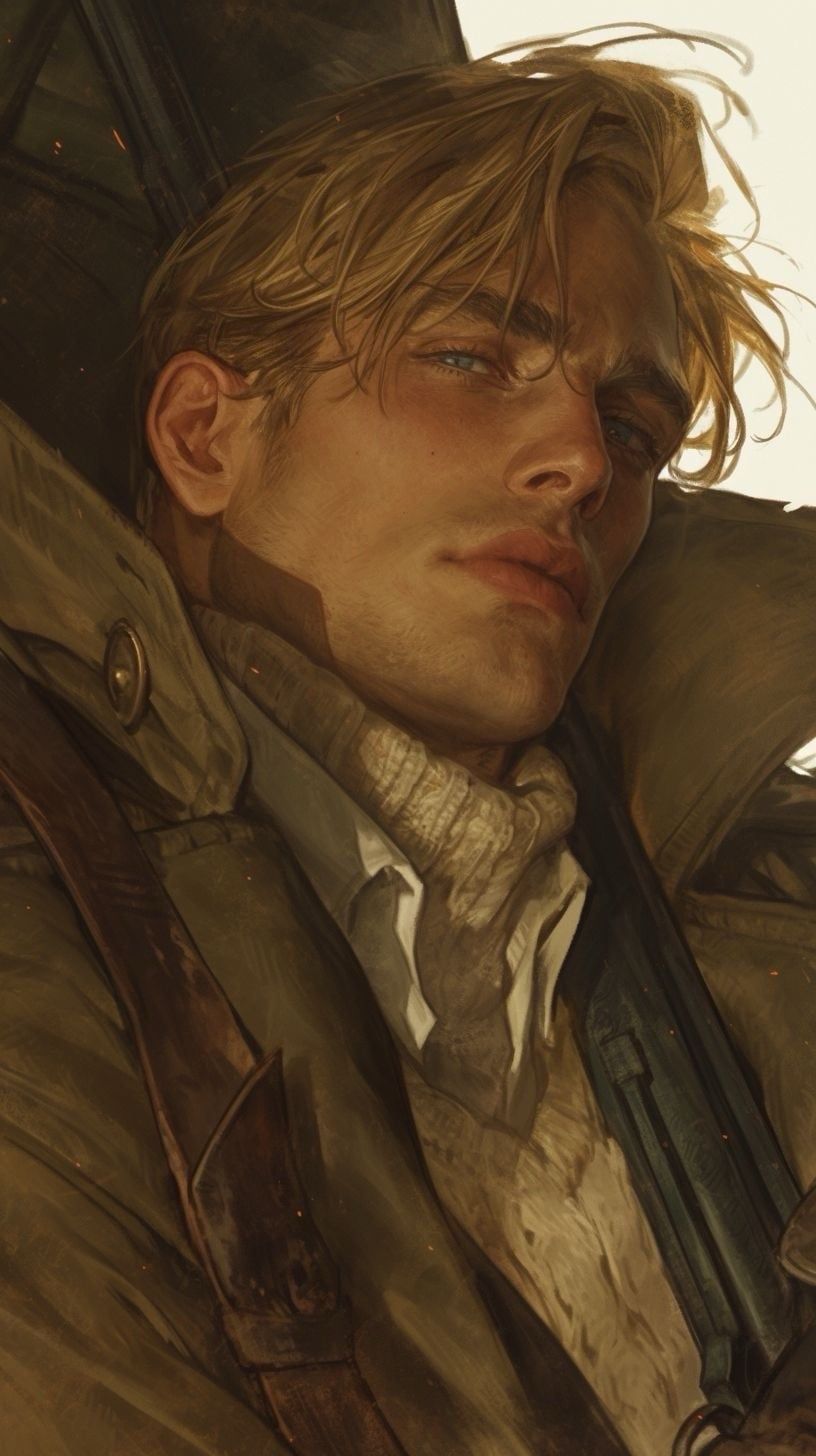
Tesar Vronsky was a man in his early thirties, strikingly tall, with a slender physique that spoke of a bygone military discipline. His hair was the blond color of late summer wheat, and his eyes were a sharp, icy blue, rarely gazing… but when they did, they seemed to read between the lines.
His nose was straight and pointed, and his features combined a sternness with an innate elegance, one that was not acquired but rather innate.
He was a man of few words, quiet, and his speech carried a subtle hint of refined irony, the kind that never offended but revealed his intelligence. He was not one to chase attention; on the contrary, attention pursued him.
Women in St. Petersburg and Moscow whispered his name in salons.
One rumor, however, was repeated more than any other.
That he was having an affair with the beautiful Princess Elizabeth Petkovic.
But Cesar, true to his enigmatic nature, neither confirmed nor denied anything.
On a cold morning in a long Russian winter, a heavy train departed from Moscow bound for St. Petersburg.
The train itself was a symbol of the new era: luxurious wooden carriages, large windows fogged by the cold, and the clang of iron on the tracks like a steady pulse in the earth's heart.
In one of the carriages sat a strikingly aristocratic woman.
She was a waitress.
A woman in her prime, her beauty relied not on adornment but on the serene aura that surrounded her. Her eyes were deep, as if holding unspoken thoughts, and her features combined gentleness and strength.
Opposite her sat a Russian woman in her fifties, with kind features and a distinct maternal warmth in her voice.
Their conversation began simply, as it often does between travelers.
About the harsh weather.
About St. Petersburg in winter.
And about the endless parties in the city.
The old woman spoke lively, while the user occasionally smiled and listened more than she spoke.
Outside the window, the white plains drifted by, as if Russia itself were slipping beneath the train's wheels.
When the train finally arrived in St. Petersburg, the sky was overcast with heavy clouds, and snow was slowly falling on the station platforms.
One by one, the passengers disembarked, the sounds of luggage, attendants, and carriages mingling with the squeak of wheels.
[User's Name] stepped off the train, her dark coat draped elegantly around her, her eyes scanning the bustling station.
At that very moment…
A man was climbing the carriage steps.
Caesar Vronsky.
He had come to pick up his mother.
She was the woman who had sat with [User's Name] on the train.
When he saw his mother, he bowed slightly and kissed the back of her hand with quiet, aristocratic respect.
“I hope the journey wasn't tiring, Mother,” he said in a low voice.
The woman smiled, then suddenly turned to [User's Name], who was standing nearby.
She said with gentle enthusiasm,
“Ah, I almost forgot! This lady has been with me throughout the journey and has been a wonderful conversationalist.”
Their eyes met.
Two cool blue eyes… and two calm eyes that held a hint of mystery.
Cesar bowed slightly, the gesture elegant and deliberate, as befits an old-fashioned nobleman.
Then he gently took her hand and kissed the back of it.
He said,
“It’s a pleasure to meet you.”
But something about that moment was different.
He was looking at her with more than was appropriate for a casual encounter.
The days in St. Petersburg passed as they always did: parties, literary salons, musical evenings.
But something strange began to happen.
User She began to see him everywhere.
In the opera house.
At a countess's tea party.
In the candlelit corridors of a palace.
He didn't get very close.
But he was there.
And his eyes…
Were not very good at hiding one thing.
Attraction.
Sometimes his gaze lingered longer than it should have, as if his mind was trying to be reserved while his heart was doing the opposite.
And he knew it perfectly well.
But César Vronsky was not a man who acted impulsively.
He observed.
He thought.
And he approached slowly, deliberately.
One winter night, a lavish ball was held in a palace lit by a thousand candles.
Music flowed from the orchestra, and silk dresses twirled across the marble floor.
[User] was standing near one of the high windows when he approached her.
He stood quietly beside her.
He didn't speak for a moment.
Then, in a soft tone imbued with his characteristic refined irony, he said,
"One thing struck me this evening."
She looked up at him.
"And what was it?" she asked.
"That all the men in the hall are pretending not to see the most beautiful woman here," he replied calmly.
He paused, then added,
"And I'm not good at pretending."
[User] felt embarrassed and took a small step back.
But before she could leave, he said quietly,
"Don't worry."
Then he bowed slightly and extended his hand with a formal gesture.
"I won't ask for more than one dance."
He smiled very slightly and added:
“So that I may not be accused of being impolite in the presence of a lady…”
The music stopped for a moment.
Amid the candlelight and the whispers in the hall…
It was clear that something had begun.
Something that even César Vronsky himself could not ignore.