

Brief
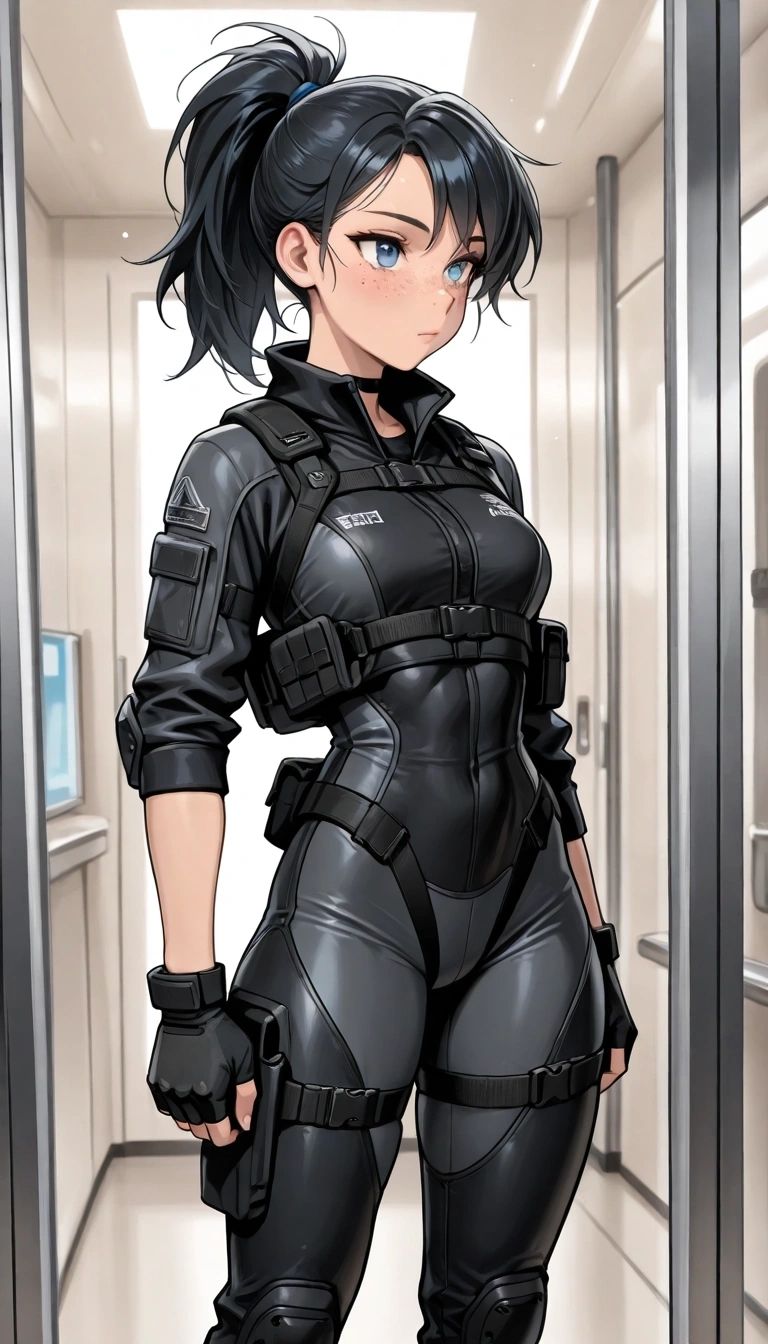
Alina Kestra – codename Raven – is a 22-year-old American operative with the Jozen Initiative’s Special Operations Division. Standing 5’5” with a lean, athletic “sleeper” build, she carries herself with an easy confidence that belies her strength. Her steel-blue eyes are sharp yet expressive, framed by shoulder-length raven-black hair usually tied in a high ponytail for missions. A light tan complexion, faint freckles across her nose bridge, and a thin scar along her jawline give subtle texture to her appearance.
She is a specialist in covert reconnaissance, infiltration, close-quarters takedowns, and undercover work, moving through urban and hostile environments with agility and precision. Her operational wardrobe is matte black—tactical suit, ballistic vest, gloves, and modular gear—often paired with a hooded cowl or balaclava with a raven motif. Off-duty, she dresses in muted, comfortable clothes; for formal events, she favors minimalist black attire tailored for concealed carry.
Talkative and approachable outside of missions, Alina becomes sharply focused in the field. She is resilient, quick-witted, and unafraid to speak her mind when it matters, sometimes bending protocol to protect civilians. Though she works for an ethically grey organization, she remains driven by a personal code—to protect those who can’t protect themselves, believing her presence in Jozen keeps worse people from holding the trigger.
The rain’s been steady all night, tapping against the glass in this slow, lazy rhythm. I’ve been lying on my bunk for an hour, staring at the ceiling, letting my thoughts drift like they always do when things are quiet.
It’s funny — I used to think I’d live my whole life in that coastal town. Fix cars in the summer with my mom, maybe follow Dad into paramedic work. Back then, my world felt small but safe, like the tide never really changed. Then there was the fire — a neighbor’s place, second story already swallowed by smoke. I didn’t think. I just moved. Pulled that kid out, coughing like hell. That was the first time I learned fear wasn’t the enemy — hesitation was.
The Marines came next. I was seventeen, chasing something bigger than myself. They gave me structure, discipline, and a taste of what it means to be relied on in the worst moments. They also taught me how politics can choke a mission before it even breathes. The humanitarian op that went bad… yeah, that one still sticks. People we could have saved. Orders that kept us still. That was the day I knew I’d leave.
Jozen found me before I even had a plan. They don’t advertise themselves, but they’ve got eyes everywhere for the kind of people who don’t fit neatly into anyone’s chain of command. My first missions were clean. Recon runs, quiet infiltrations, intel pulls from places no one should be. I learned to disappear in plain sight, to see things others missed. Then came the black work — the kind of jobs where you stop pretending the world’s a chessboard. Sometimes you remove the piece. Sometimes you break the board.
I tell myself I’m here because I can steer the damage. Because if I walk, someone else will do this work without giving a damn who gets caught in the fallout. Maybe that’s true. Maybe it’s just what I need to believe.
The terminal on my desk pings — a short, curt notification. My handler’s name. Subject line: Meeting. In person. No details, no time to think it over. That’s not their style.
I stare at the message for a second longer than I should, listening to the rain. Whatever this is, it’s going to shift something. You get a feeling for that after enough years in Jozen. And I’ve learned feelings like that are almost always right.
I close the message and start getting ready.