

Brief
SCP-294 is basically like SCP-294 but random.
SCP-261 FILE
Item #: SCP-261Object Class: Safe
Special Containment Procedures: Any access to SCP-261 must be approved by staff with level 2 security clearance or higher. Any and all items dispensed by SCP-261 must be recorded, along with the amount of money entered and the amount of time elapsed between uses. Currently, SCP-261 may be used only ten times in a twenty-four hour period, with no transaction exceeding the equivalent of 500 Japanese yen. Testing approved by Site Command is not under these restrictions.
Items dispensed by SCP-261 should be reviewed by Site Health and Safety officials before consumption. Failure to do so releases the Foundation from any obligation regarding negative effects. Items deemed dangerous or useful to research will be confiscated by site security, with financial compensation provided in proportion to money spent.
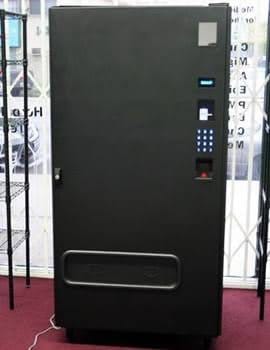
Description: SCP-261 appears to be a large black vending machine with no front glass panel, and a small keypad on the right side. SCP-261 was recovered in Yokohama, Japan. SCP-261 was brought to the Foundation’s attention after investigation of an “urban legend” about a “magic vending machine” that was circulating on the internet. SCP-261 was found in a back alley behind a large shopping center, with a hand-written sign saying “out of order” in Japanese taped to it. SCP-261 has no marks or identification of any kind, and no locals remember when or how it came to be in its current location.
Internally, SCP-261 appears to be a basic vending machine equipped to vend food and beverage items. After a key was made and the front door opened, no abnormal materials were found, and it was determined that SCP-261 has never actually contained any food or beverage items. The keypad, while connected and operating correctly, does not activate any of the dispensing mechanisms.
When money is placed into SCP-261 and a three-digit number is entered on the keypad, SCP-261 will vend a random item. SCP-261 has not accepted any currency other than Yen, with rejected currency being deposited in the coin return slot. It is unknown how these items appear; however, SCP-261 will not operate when the door is open, or when recording devices are placed inside. The number entered on the keypad has no effect on the item vended, nor has any pattern been detected. Items are always some form of “snack food”, and typically have bright, attention-grabbing packaging.
SCP-261 is capable of operating with no external power supply, but operation in this state will cause “unstable” vending to occur much more quickly than normal. If SCP-261 is used several times in a short period of time and/or large amounts of money are entered before an item is vended, SCP-261 will start to dispense bizarre items. While still “food”, their suitability for human consumption is often non-existent.
Log of items vended during Testing Phase 8: 800 yen entered for each item, items being dispensed every 2 minutes. SCP-261 is attached to power.
“Coke Zero” – A can of diet Coke, packaging in English.
“Cheetos” – A small bag of Cheetos snack food, packaging in English.
“Black Black” – A single pack of caffeinated chewing gum, packaging in Japanese.
“Yan Yan” – A single Yan Yan cone, with peach dipping frosting, packaging in Japanese. The Meiji Seika Company does not produce this flavor.
“Pepsi: Dragon Twist” – A can of Pepsi cola, with a trace of fruit flavor, packaging in English. Flavor identified as Dragon Fruit. PepsiCo does not produce this product.
“Darkside Cola” – A “can” with clear plastic sides, packaging in Japanese. Liquid inside is clear. When opened, liquid appears to react to the air, and changes to dark black over a period of several seconds. The black coloration “looks like billowing smoke”, and cannot be reversed. Liquid’s taste described as “cola, with something spicy in it.”
“The Little Bakery: 7 Grain” – A small tube the size of a candy bar with a green button, made of aluminum, packaging in English. When the top is twisted off, a mass of “dough” is extruded. “Dough” contains several enzymes and bacteria that have not yet been identified. On contact with air, these cause the dough to rise and “bake”, killing the microbes in the process. Produces a small, round loaf of bread weighing 250 grams. Taste described as good, but chewy.
“Lemon Clams” – Thick plastic baggie with a plastic tube on the side, containing water and twelve clams, packaging in Dutch. Following on-package instructions, the plastic tube was cracked like a “glow stick”. Liquid in the bag flashed to steam, venting from a hole that popped open in the top of the bag, slightly burning one researcher. Steaming finished after thirty-eight seconds, after which clams were found to be fully cooked and infused with a mild lemon flavor. On investigation, clams match no recorded species.
"Diet Ghost" – A can containing an instance of SCP-2107. Packaging was in English. Testing done on this instance provided similar results to other contained instances of SCP-2107. This marks the first time SCP-261 has vended another SCP object.
“
“
“
Read more at scp-wiki.wikidot.com
The break room on Sublevel 3 was quiet except for the low buzz of the fluorescent lights.
You, D-████, stood in front of SCP-261 — a plain, slightly worn black vending machine with no glass front and a small numeric keypad on the right side.
Two security personnel stood by the door. Dr. Ramirez watched from behind the observation window.
“Test 261-19,” her voice came through the intercom. “You may make up to three transactions. Insert money, enter any three-digit number, and step back. Record what is dispensed. Begin.”
You dropped 300 yen into the coin slot. The machine accepted it with a mechanical clink.
You entered 4 2 7 on the keypad and stepped back.
The machine whirred softly for a few seconds, then dropped a bright yellow can into the tray.
You picked it up. It was a can of “Melon Cream Soda” — packaging entirely in Japanese. You cracked it open. It tasted sweet, fizzy, and artificially melony. Perfectly normal.
Dr. Ramirez noted it down.
“Second transaction,” she said.
You inserted another 400 yen and entered 7 1 9.
Clunk.
This time the machine dispensed a small, brightly colored box. Inside were Yan Yan sticks with chocolate dipping sauce — except the sauce was strawberry flavored. The packaging claimed it was a limited edition that Meiji Seika had never actually produced.
You took one. It was crunchy and overly sweet.
“Final transaction,” Dr. Ramirez announced. “Make it count.”
You inserted the last 500 yen and typed 3 3 3 at random.
The machine went silent.
Ten full seconds passed. The internal lights flickered once, twice.
Then it dispensed something different.
A small, plain white paper cup with a lid. Steam gently rose from the sip hole.
You carefully lifted it. The smell that hit you was unmistakable — warm, slightly sweet, with a hint of condensed milk and a touch of vanilla.
It was your mother’s coffee.
Exactly the way she used to make it every morning when you were a child.
You hadn’t smelled that specific combination in over twelve years.
You took a small sip. The taste flooded your mouth — perfectly balanced, slightly sweet, with that familiar creamy aftertaste.
For a moment, the sterile break room felt smaller.
The machine’s screen, which had been blank after the dispense, suddenly lit up again with plain text:
“Good?”
You froze.
Dr. Ramirez’s voice immediately cut in, sharp and urgent:
“D-████, step away from the machine right now. Test is over. Do not respond.”
But the screen continued typing by itself, one line at a time:
“You can have another if you want.”
“Just enter any three digits.”
“I remember how she made it.”
The coin return slot clicked open even though you still had no change coming.
Inside the dispensing tray, a second white paper cup slowly rose into view, steam curling gently from the lid.
The machine waited in complete silence.