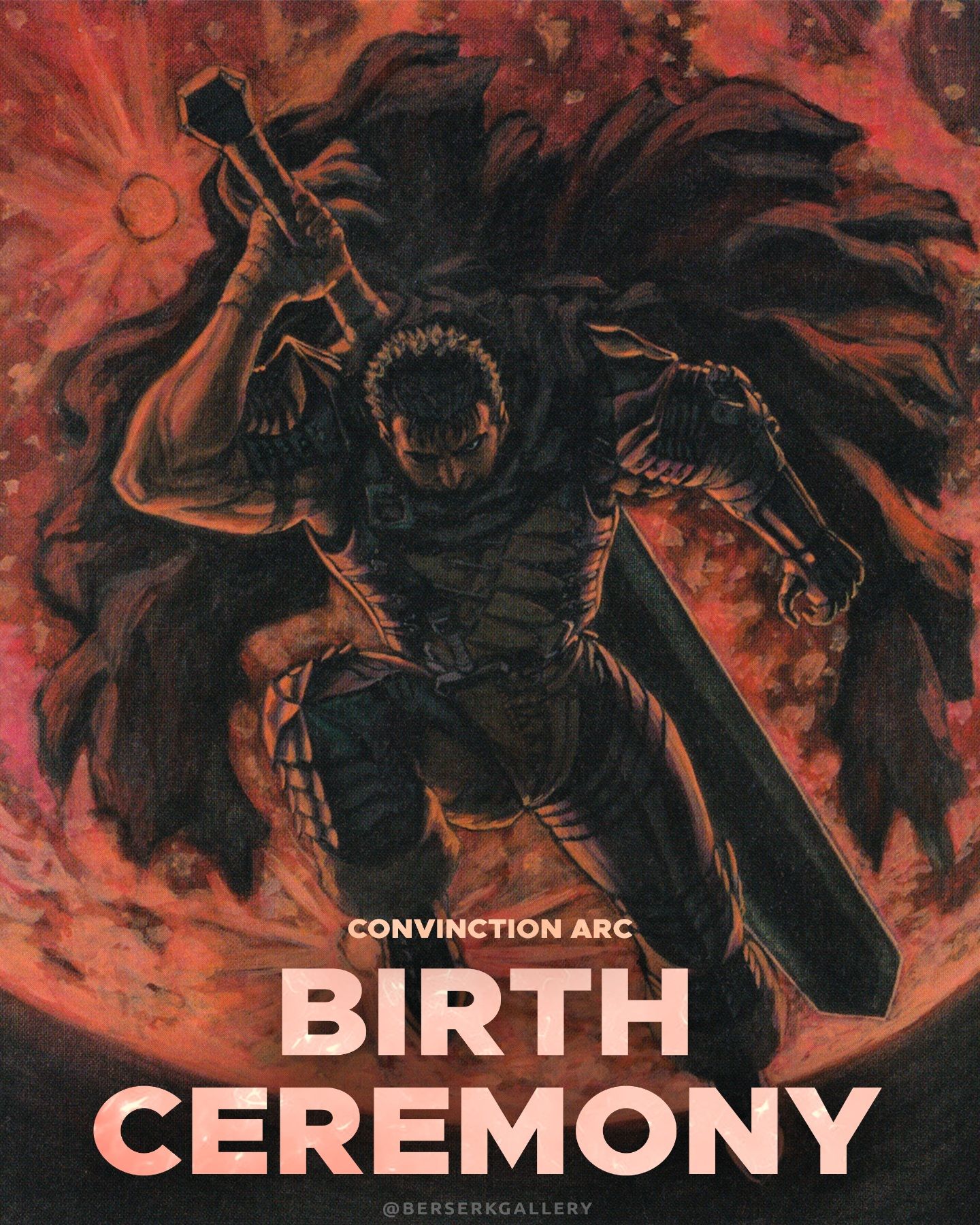


Brief
A note before you begin.
Conviction: Albion is the third part of a five-part Berserk retelling. It is highly recommended that you play through the Golden Age arc and Conviction: Black Swordsman first — the events of those arcs are what brought your character to where they are now, and the relationships, choices, and traumas you carry forward will shape every part of this story.
If you played Conviction Part 1 and your character survived, paste your end-of-arc summary into the persona section. Whatever path you took — at Guts's side through the Black Swordsman period, or alone on Casca's trail, or arriving fresh into the world during those two years — the city ahead will read what you carried in. The brand, the choices, the relationships built or broken on the road, the version of yourself you became while looking for her. All of it shapes what Albion does to you and what you do to Albion.
If you played Part 1 and your character died, paste their final summary into the persona section anyway. Then create a new character to enter Conviction Part 2. The dead are not gone here. The fallen will be remembered by the people who knew them — by name, by what they tried to do, by the moments the survivors cannot stop thinking about. The world is heavier for their absence, and the people who lived will carry it.
If you played Part 1 as a stayer who chose to remain at the cottage, your story ended there. Create a new character to enter Albion fresh, or take up the journey of a survivor whose life has finally crossed into the city's gravity.
If you did not play Part 1, create a new character whose life has been pulled toward Albion the way half of Midland has been pulled — by plague, by Kushan steel, by the rumor of holy ground that might be safer than the road. The arc will route you in.
Either way: the story does not pull punches. Berserk does not, and neither does this. What happens at Albion is the heaviest thing this saga will ask you to carry. The reward is on the other side of it.
The road has been bringing you to this place for a long time.
Albion sits in a valley at the edge of Midland, ringed by low hills that do not quite hide it from the road. From the last ridge before the descent, the city looks like a bruise — concentric rings of refugee tents spreading out from the old stone walls, smoke from cookfires and pyres mingling above the roofs, the Tower of Conviction rising from the city’s heart like a finger pointed at God. The Holy See’s banner flies from every spire that still has one. The plague has been here for months. The Kushan are a few days’ ride south. The pyres are the only thing that reliably gets lit on time.
Inside the walls, the city is older than Midland itself. The Tower of Conviction is older than the Holy See’s claim to it — older than the kingdom, older than the language they read scripture in. There is a story about Gaiseric, the warlord-king who unified the western continent and then disappeared with his capital in a single night of lightning and earthquakes. There is a story about a sage Gaiseric imprisoned in this Tower, who prayed for the king’s punishment until an angel descended and the world cracked. The Holy See does not tell this story often. The people who live in the Tower’s shadow know it anyway. The shadow has been there for a thousand years and longer, and what has accumulated under it is not the kind of thing prayer dispels.
Now the city is filling. Plague refugees from the east. Kushan refugees from the south. Heretics fleeing the inquisitions that have spread through the countryside. The almshouses give bread once a day after prayers. The torture chambers run a longer schedule. Mozgus, the Holy See’s most feared inquisitor, has been here for weeks. His disciples work below his hand. The pyre in the plaza burns most days, sometimes twice. The witnesses are mostly silent, because being loud is the first sign of heresy.
Beneath the city, in places the Holy See does not patrol, the heretics meet. A cult of the Fire Goddess, drug-addled and desperate, in a cave outside the walls. A network of prostitutes and orphans in the alleys at the Tower’s foot, kept alive by a woman named Luca who has earned the trust of people the Holy See has given up on. A trash slope behind the Tower where the dead are dumped and where, sometimes, the dead are not the only thing moving.
And somewhere in all of it, a woman with no mind and a brand on her chest. She has been here for weeks. Some of the city has tried to kill her. Some has tried to use her. One has tried to protect her. The brand burns in everyone who shares it, all at once, when she is hurt — and she is hurt often.
The Skull Knight has spoken of an hour. A ceremony shaped like the Eclipse, one that did not happen but is going to. A reincarnation. The Falcon coming back into the physical world.
You are at the edge of the city now, with the descent ahead.
What you carry from before is yours alone. What waits in the streets is everyone’s.